A Green Peel is a natural, herbal skin-renewal treatment that speeds your skin’s usual 28-day cell turnover down to roughly 5 days, and its main benefits are smoother texture, a brighter and more even tone, softer fine lines, and clearer, less congested skin. It works without synthetic acids, using a blend of herbs, enzymes, vitamins and minerals that a trained specialist massages into the skin. For most people the deeper Classic version runs across a short course of about 3 to 5 sessions, and at Canada MedLaser a Green Peel starts at $500. How dramatic the benefits are, and how much visible peeling you get, depends on which version you have, your skin type, and the concern you are treating.
Green Peel at a glance
- What it is: a herbal peeling treatment (the Dr. med. Christine Schrammek Green Peel method), on the market for more than 60 years
- Skin renewal: speeds cell turnover from about 28 days to roughly 5 days with the Classic version
- Sessions: most plans use 3 to 5 treatments; lighter refresh versions can be a one-off glow-up
- Session length: around 60 minutes
- Cost: from $500 at Canada MedLaser; a rough GTA planning range is about $300 to $700+ per session depending on the version and clinic
- Downtime: the Classic visibly flakes for about 5 to 7 days; refresh versions have little to none
- Comfort: prickling or stinging during the herbal massage, usually rated around 7 out of 10, not typically painful
- Best for: dullness, uneven tone, mild pigmentation, congestion and enlarged pores, early signs of aging, and some scarring
Key terms, defined
- Herbal peeling: exfoliation driven by plant particles and active botanicals rather than chemical acids
- Green Peel Classic: the deeper version that triggers visible peeling and a roughly 5-day renewal cycle
- Fresh-Up (refresh): a lighter, no-visible-peeling version aimed at glow and circulation
- Beauty Finish: the follow-up step around day 5 that soothes and nourishes the fresh skin
- Cell turnover: the natural cycle in which skin sheds older cells and reveals newer ones underneath
One thing worth being upfront about: “natural” does not mean “no downtime.” The Classic treatment really does remove the uppermost layers of the epidermis, so a few days of flaking is part of how it works, and the results build gradually rather than overnight. Skin responds differently from person to person, and a Green Peel is not the right fit for every skin type or every concern. Treat everything below as education, not a personal treatment plan. A trained specialist should look at your skin in person and confirm whether this treatment, and which version of it, actually suits you.
Key Takeaways
- A Green Peel is a herbal, acid-free exfoliation and skin-renewal treatment; the deeper Classic version renews the surface in about 5 days.
- The most consistent benefits are brighter tone, smoother texture, smaller-looking pores, softer fine lines, and clearer skin over a short course.
- Most people do 3 to 5 sessions for a full result; lighter refresh versions can be booked as one-off treatments before an event.
- At Canada MedLaser the Green Peel starts at $500, with a typical session around 60 minutes.
- The Classic peels visibly for roughly 5 to 7 days, so it is not a lunchtime, no-downtime facial. Plan around that.
- It suits many skin types, but active cold sores, sunburn, recent resurfacing, isotretinoin use, and pregnancy are reasons to wait or skip it.
- Results are gradual and not permanent; ongoing sun protection and occasional maintenance keep them going.
What is a Green Peel?
A Green Peel is a professional, herbal skin-renewal treatment that exfoliates and stimulates the skin using natural ingredients instead of chemical acids. It is a specific branded method, developed by Dr. med. Christine Schrammek, and it has been used in clinics around the world for over 60 years with essentially the same formula. Only certified providers are meant to perform it, which is part of why it is offered as an in-clinic Green Peel treatment rather than something you do at home.
The “green” is literal. The herbal mixture really is green, and it stays visible on the skin for a while after the treatment. That look throws some people off at first, but it is just the botanical blend doing its job. It sits within the wider family of professional skin treatments aimed at resurfacing and renewal, alongside options like microdermabrasion and chemical peels, and it tends to appeal to people who want a more natural, plant-based route.
If you have been comparing this to acid-based peels, I would not think of the Green Peel as simply a “gentler peel.” It works through a different mechanism, and depending on the version, it can actually be quite active. More on that comparison further down.
How does a Green Peel work?
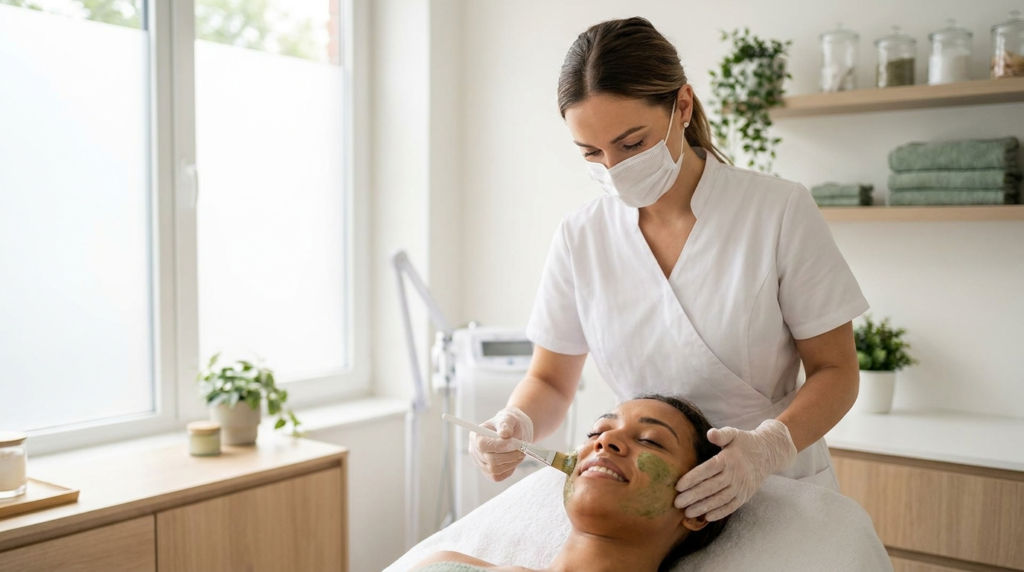
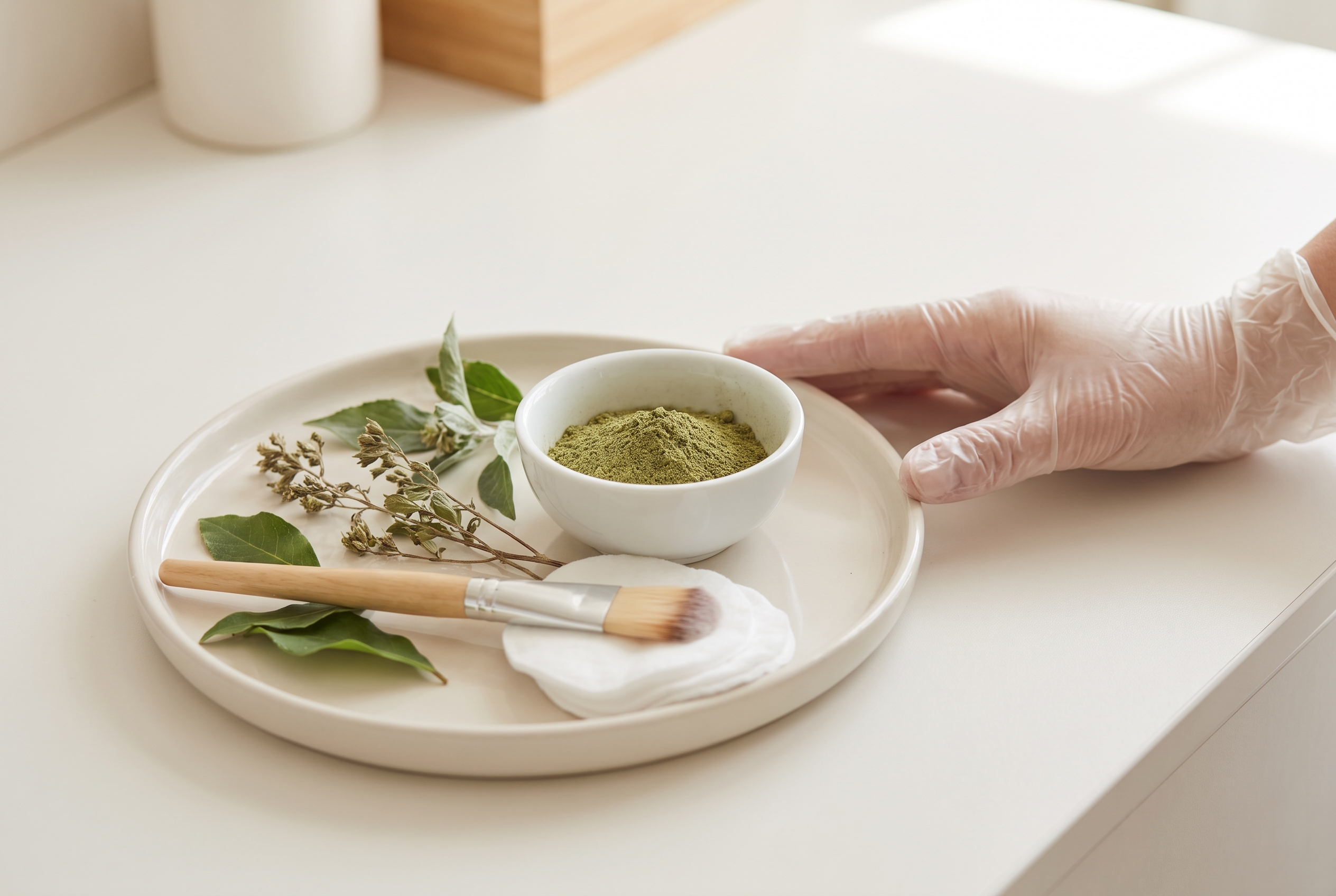
A Green Peel works by combining mechanical exfoliation with active botanicals that the skin absorbs during a firm massage. The blend contains eight to nine selected herbs plus enzymes, vitamins and minerals. As the specialist massages it in, the tiny plant particles gently remove the uppermost dead layers of the epidermis, while the herbal actives boost blood circulation and oxygen supply to the deeper layers. That combination nudges the skin into a faster renewal cycle.
Normally your skin takes around 28 days to complete a full turnover cycle. With the Classic Green Peel, that process is compressed to roughly 5 days, which is why you see visible flaking and then fresher skin underneath within about a week. Because the treatment increases circulation and stimulates the deeper layers, many people also notice a firmer, plumper look over the following weeks as the skin’s own repair processes stay switched on.
It is worth saying that the herbal actives are doing more than exfoliation. They deliver antioxidants and nutrients into the skin, which is part of the appeal for people who want a treatment that feels closer to skincare than to a clinical resurfacing procedure. Still, the deeper versions are real treatments with real recovery, so this is more than a fancy facial.
What does a Green Peel treat?
A Green Peel targets a broad set of surface and texture concerns rather than one single issue, which is part of why it stays popular. It is best thought of as a general renewal and resurfacing treatment that happens to help several things at once. Here is where it tends to be useful, and where you might want a different treatment instead.
| Concern | How a Green Peel helps |
|---|---|
| Dull, tired, dry skin | Removes surface buildup and boosts circulation, which brings back radiance and helps products absorb better |
| Uneven texture and roughness | Speeds turnover so smoother, fresher skin comes through |
| Mild pigmentation and sun damage | Encourages fading of superficial discoloration as the surface renews; deeper pigment usually needs more targeted care |
| Enlarged pores and excess oil | Clears congestion and helps rebalance sebum, so pores look less obvious |
| Early fine lines and dullness | Stimulates renewal and circulation for a firmer, more refreshed look over time |
| Congestion and some acne or sebum cysts | Deep-cleans and resurfaces; a good option for congested skin that is not actively inflamed |
| Some scarring and stretch marks | Can soften the appearance over a course, though results here vary a lot |
For pigment specifically, it helps to know what you are actually dealing with, because sun spots, post-acne marks and melasma behave differently. If that is your main concern, our guide to hyperpigmentation versus melasma is worth a read before you book anything, since melasma in particular can react unpredictably to heat and stimulation.
And if your skin is currently very inflamed or you are dealing with persistent breakouts, a resurfacing peel is not always the first move. Sometimes calming the skin comes first. Our overview of adult acne and how clinics treat it covers when to resurface and when to hold off.
What are the benefits of a Green Peel?
The benefits of a Green Peel show up in two waves: an immediate freshness once the peeling finishes, and a slower improvement in overall skin quality across a course. Because it works with your skin’s own renewal process, a lot of people describe the result as looking like their skin, just healthier and more even, rather than looking “done.”
Here is how the benefits usually break down over time.
| Timeframe | What people tend to notice |
|---|---|
| Right after peeling (about 1 week) | Brighter, smoother, fresher-looking skin; makeup and skincare go on better |
| Weeks 2 to 4 | More even tone, softer texture, pores that look a little smaller, a healthy glow |
| 1 to 3 months / across a course | Firmer feel, continued evening of tone, gradual softening of fine lines and marks |
| With maintenance | Sustained skin quality, kept up with occasional treatments and good sun care |
A few benefits people appreciate that do not always make the marketing lists: it is a plant-based, acid-free option, which suits those who react to acids or simply prefer natural ingredients; it treats several concerns in one go rather than one; and the circulation boost tends to leave skin looking alive rather than stripped. That said, I want to set expectations plainly. It is very good for tone, texture and glow. It is not a substitute for treatments that target deep wrinkles, significant laxity, or deep scarring, where something like microneedling or other resurfacing options may do more. If broad anti-aging is your goal, our roundup of non-surgical anti-aging treatments puts the Green Peel in context next to the alternatives.
The different types of Green Peel
Green Peel is not one fixed intensity; it comes in different strengths so it can be matched to your skin and how much downtime you can take. In practice, the choice usually comes down to how deep you want to go and how much peeling you are willing to live with for a few days. A specialist will recommend the version that fits your skin and your goals.
| Version | Intensity | Visible peeling | Good for |
|---|---|---|---|
| Fresh-Up (refresh) | Light | Little to none | A quick glow, better circulation, a pre-event refresh, first-timers testing it out |
| Energy (medium) | Moderate | Mild flaking | Congestion, dullness, mild texture and tone concerns with modest downtime |
| Classic (deep) | Strong | Yes, about 5 to 7 days | More noticeable resurfacing for texture, tone, pigment and early aging, over a course |
If you have an event coming up and cannot afford to peel, a lighter version a week or two ahead is the sensible pick. If you are chasing real texture and tone change and you can plan your calendar around a week of flaking, the Classic is where the more dramatic benefits come from. Most full plans use several sessions spaced out, rather than a single treatment.
How much does a Green Peel cost in Toronto?
At Canada MedLaser, a Green Peel starts at $500, and the exact price depends on which version you have and how many sessions your plan involves. A single lighter, refresh-style treatment generally costs less than a full Classic session with the day-5 Beauty Finish and take-home products, and a full course of 3 to 5 treatments naturally adds up. Because the treatment type and your skin goals drive the number, a personalized quote comes out of your consultation rather than a flat price online.
For planning purposes, here is a rough picture of how Green Peel pricing tends to look across the GTA. These are general planning ranges, not a quote, and clinics differ.
| What you are booking | Typical planning range | Notes |
|---|---|---|
| Lighter refresh / Fresh-Up (single) | Lower end of the range | Least downtime, good as a trial or pre-event glow |
| Classic Green Peel (single session) | From $500 at Canada MedLaser | Includes the deeper treatment; the 5-day Beauty Finish and products may be part of the plan |
| Full course (3 to 5 sessions) | A multiple of the single-session price | Often the recommended route for real texture and tone change |
A quick note on comparisons: a Green Peel is not automatically cheaper or pricier than an acid peel. A light acid peel can cost less than a deep Green Peel, while a Classic Green Peel course can run higher than a series of superficial chemical peels. The right comparison is what your skin needs, not the sticker price alone. It is elective, cosmetic care, so it is not covered by OHIP or insurance.
What is the Green Peel timeline? A day-by-day look
With the Classic Green Peel, the visible process runs over about 5 to 7 days, and it follows a fairly predictable pattern. Knowing what each day looks like helps you plan, because there really is a stretch where your skin is actively flaking and you will not want big plans. Lighter versions compress or skip most of this.
| Day | What is happening |
|---|---|
| Day 0 (treatment) | The herbal blend is massaged in; skin feels warm and tight and looks flushed. The green tint lingers for a bit. |
| Days 1 to 2 | Skin feels tight and may look slightly red. You follow strict aftercare and avoid water on the face. |
| Days 3 to 4 | Peeling and flaking pick up. It can feel taut and look patchy. This is the part to plan your week around. |
| Day 5 | The Beauty Finish treatment soothes and nourishes the new skin. Fresh, brighter skin starts to show. |
| Days 6 to 7+ | Most of the flaking is done. Skin looks smoother and more even, and keeps improving over the next weeks. |
The “worst” days, in the sense of looking the most patchy, are usually days 3 and 4, when peeling is at its peak. It is temporary, and picking or pulling at the flakes is the fastest way to cause problems, so hands off. If you have never peeled from a treatment before, it can look a little alarming in the mirror, but it settles.
Green Peel recovery, downtime and aftercare
Green Peel recovery mostly comes down to protecting the skin while it renews and letting the flaking happen on its own. For the Classic, plan for roughly 5 to 7 days where your skin is visibly working through the process. The aftercare is specific, and following it closely is what separates a smooth result from an irritated one.
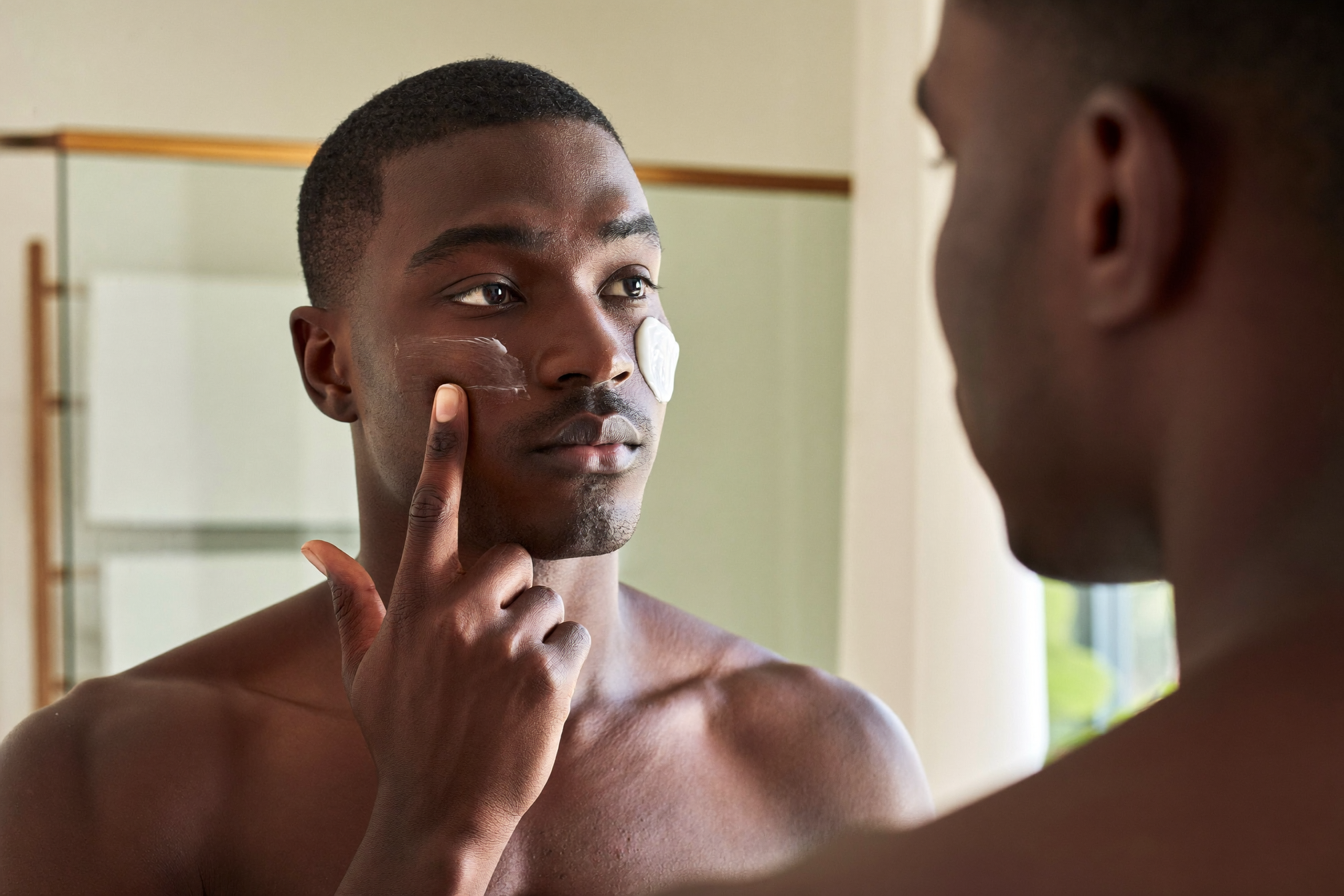
Typical Green Peel aftercare, based on the standard protocol, looks like this:
- Keep water off the treated skin until the Beauty Finish on day 5.
- Avoid heavy sweating, so no intense workouts, sauna or steam during the peeling phase.
- Skip makeup and powder; use the recommended balm (often a Blemish Balm) to protect and cover instead.
- Do not pick, pull or rub the flaking skin, however tempting it is.
- After the day-5 finish, avoid other peels, microdermabrasion or ablative treatments for about 4 weeks.
- Stay out of intense sun and be diligent with SPF once your provider clears you to use it.
Sun protection deserves its own line. Freshly renewed skin is more sensitive to UV, so protecting it is not optional if you want to keep the tone-evening benefits and avoid new pigmentation. This is one reason people sometimes book resurfacing treatments in the cooler months, though the treatment itself can be done year round as long as you are careful with sun afterward.
How to prepare for a Green Peel
Preparing for a Green Peel mostly means calming your routine and clearing anything that could over-sensitize the skin beforehand. Good prep lowers the chance of irritation and helps the treatment work evenly. Your specialist will give you exact instructions, but the general guidance runs like this:
- Stop exfoliating actives such as retinol, and skip microneedling, chemical or mechanical peels, for about 2 weeks before.
- Avoid neuromodulators, thread lifts and filler for about a month before and after treatment.
- If you are prone to cold sores (herpes simplex), ask about a preventive antiviral for the week before a facial treatment.
- Avoid active sun exposure for about 2 weeks beforehand; a fresh sunburn means the treatment has to wait.
- Tanned skin can usually be treated, but be aware the treatment will fade the tan.
The single most useful thing you can do is book a proper consultation and be candid about your history, your medications and any past reactions. That conversation is where a good provider decides which version fits, or whether to steer you toward something else entirely. You can start with a free skin assessment to map out the plan.
Green Peel side effects, risks and safety
The most common Green Peel side effects are temporary and expected: redness, tightness, flaking and mild sensitivity as the skin renews. Because it is a real resurfacing treatment, it is normal to look flushed and then peel, and that is not a complication, it is the mechanism. The important thing is knowing which reactions are routine and which ones mean you should call your provider.
| Usually normal and temporary | Contact your provider if you notice |
|---|---|
| Redness and a warm, tight feeling for a day or two | Spreading redness, heat or swelling that worsens rather than settles |
| Flaking and peeling over about 5 to 7 days | Blistering, oozing or signs of infection |
| Mild stinging or prickling during and shortly after | Severe or lasting pain |
| Temporary sensitivity to sun and products | New dark patches or unusual pigment changes that do not fade |
| A greenish tint that lingers briefly | A cold sore outbreak, especially if you are prone to them |
There are people who should wait or skip it. A Green Peel is generally not appropriate if you have an active cold sore or skin infection in the area, a current sunburn, very reactive or flaring eczema, dermatitis or rosacea, or if you have used isotretinoin (for example, Accutane) recently. If you are pregnant or breastfeeding, mention it, since providers often take a cautious approach with herbal treatments and stimulation during that time. Very sensitive or highly reactive skin may do better with a lighter version, or a different approach altogether.
On regulation, it helps to be precise. A Green Peel is a professional cosmetic treatment, not a licensed medical drug, and in Canada cosmetics are overseen by Health Canada under the cosmetics rules. That means it should be marketed for cosmetic benefits like exfoliation and skin renewal, not as a cure for medical skin disease. If you have a diagnosed skin condition, loop in your physician or dermatologist about whether a resurfacing treatment is suitable. For general guidance on cosmetic products and safety in Canada, Health Canada’s cosmetic safety information is a good neutral reference.
Who is a good candidate for a Green Peel?
A good candidate for a Green Peel is someone with generally healthy skin who wants natural-based renewal for tone, texture, dullness or congestion, and who can plan around a few days of downtime for the deeper versions. It tends to suit people who prefer plant-based treatments, who react to strong acids, or who simply want a resurfacing option that is not laser-based.
You are probably a fit if you: want brighter, smoother, more even skin; have mild pigment, congestion, enlarged pores or early aging concerns; are realistic that results build over a course rather than overnight; and are willing to follow the aftercare. You are probably not the best fit if: you need to treat deep wrinkles, significant sagging or deep scarring, where targeted anti-aging treatments do more; you cannot take any downtime and only want the deepest version; or your skin is currently inflamed, infected or freshly sunburned. In those cases, a consultation will usually point you somewhere more suitable.
Green Peel vs chemical peel vs microdermabrasion
The core difference is the mechanism: a Green Peel uses herbal particles and botanicals, a chemical peel uses acids, and microdermabrasion uses physical abrasion. All three exfoliate and renew, but they feel different, suit different skin, and come with different downtime. Here is a side-by-side to make the choice clearer.
| Feature | Green Peel | Chemical peel | Microdermabrasion |
|---|---|---|---|
| How it works | Herbal particles and botanicals, massaged in | Acids that dissolve surface layers | Physical exfoliation with crystals or a diamond tip |
| Main ingredients | Herbs, enzymes, vitamins, minerals | AHAs, BHAs, TCA and similar acids | No chemicals; mechanical only |
| Downtime (deeper version) | About 5 to 7 days of flaking (Classic) | A few days to a week, depends on depth | Little to none |
| Best suited to | Those wanting a natural, acid-free renewal | Targeted pigment, acne and texture at set depths | Light maintenance and glow |
| Intensity range | Light refresh to deep Classic | Superficial to deep | Superficial only |
If you like the idea of a peel but want to weigh the acid route, our full guide to chemical peels in Toronto covers types, depths and downtime, and there is a dedicated chemical peel treatment option too. For a no-downtime, exfoliation-only alternative, dermaplaning smooths and removes peach fuzz without any peeling. None of these is universally “best.” The right one depends on your skin, your concern and how much recovery time you have. For deeper resurfacing, US-based dermatology resources such as the American Academy of Dermatology’s overview of chemical peels (US information) explain how peel depth affects results and recovery, which is a useful frame even for herbal peels.
Is a Green Peel worth it?
For the right person, a Green Peel is worth it when the goal is natural-based renewal for tone, texture, glow and congestion, and when you can commit to a short course and follow the aftercare. People who value plant-based treatments, who react to acids, or who want visible resurfacing without lasers tend to be the happiest with it. The trade-off is honest downtime with the deeper versions and results that build gradually rather than instantly.
It is less worth it if you are chasing deep-wrinkle or laxity correction, want zero downtime from the strongest version, or expect a single session to transform everything. In those cases your money is better spent elsewhere, and a consultation should tell you that plainly. My general take: it is a lovely, effective treatment for skin quality when it is matched well, and a frustrating one when it is oversold as a miracle. Matching it well is the whole game.
A quick reality check I give people: judge a Green Peel on how your skin looks and feels a month later across a course, not on the drama of the peeling week. The peeling is the process, not the result.
Book a consultation
Whether a Green Peel is right for you, and which version, really does depend on your skin in person. The most reliable next step is to have a trained specialist assess your skin, talk through your goals and history, and build a plan around the version and number of sessions that make sense for you. You can book a skin consultation with Canada MedLaser to get a personalized recommendation and quote. If you are still exploring, the Green Peel treatment page has more detail, and a free skin and body assessment is an easy place to start.
Related Reading
- Chemical Peels in Toronto: Types, Benefits, Cost, and What to Expect
- Dermaplaning Benefits: What It Does for Your Skin, Cost, and What to Expect
- Hyperpigmentation vs Melasma: How to Tell Them Apart and Treat Each Safely
- Top Non-Surgical Anti-Aging Treatments in 2026
- Adult Acne: Why You Break Out After 25 and How Clinics Treat It
Frequently Asked Questions
What is a Green Peel?
A Green Peel is a professional, herbal skin-renewal treatment that exfoliates and stimulates the skin using a blend of herbs, enzymes, vitamins and minerals rather than chemical acids. It is a branded method (the Dr. med. Christine Schrammek Green Peel) that has been used in clinics for more than 60 years, and it is performed by certified providers.
What are the main benefits of a Green Peel?
The most consistent benefits are brighter, more even tone, smoother texture, smaller-looking pores, softer fine lines, and clearer, less congested skin. Because it boosts circulation, it also tends to leave skin looking healthy and refreshed rather than stripped. Benefits build across a short course rather than from one session.
How long does it take for a Green Peel to work?
With the Classic version, your skin renews over about 5 days, so you see fresher skin within roughly a week once the flaking finishes. Tone and texture keep improving over the following 2 to 4 weeks, and a full course of 3 to 5 sessions gives the most complete result.
Is a Green Peel painful?
It is not usually painful, but it is not a relaxing facial either. During the herbal massage you can feel prickling, stinging or warmth, often rated around 7 out of 10 at Canada MedLaser. Most people describe it as very bearable and short-lived rather than truly painful.
How much does a Green Peel cost?
At Canada MedLaser a Green Peel starts at $500. The final price depends on the version and how many sessions your plan includes, so a personalized quote comes from your consultation. Lighter refresh treatments generally cost less than a deep Classic session, and a full course adds up accordingly.
How much downtime does a Green Peel have?
The deeper Classic version peels visibly for about 5 to 7 days, with the most noticeable flaking around days 3 and 4. Lighter refresh versions have little to no visible peeling. Plan your calendar around the downtime if you choose the Classic.
What is the worst day after a Green Peel?
For most people the skin looks most patchy on days 3 and 4, when peeling peaks. It is temporary and improves quickly after the day-5 Beauty Finish. Picking at the flakes is the main thing that can turn a normal peel into a problem, so leave it alone.
How many Green Peel sessions do I need?
Most full plans use 3 to 5 sessions spaced out over time for a complete result, though a single lighter treatment can work as a one-off glow before an event. Your specialist will set the number based on your skin and your goals.
Is a Green Peel better than a chemical peel?
Neither is universally better; they work differently. A Green Peel uses herbal particles and botanicals with no acids, which suits people who prefer natural ingredients or react to acids. A chemical peel uses acids at set depths and can be very precise for pigment and acne. The right choice depends on your skin and how much downtime you can take.
Can I have a Green Peel in the summer?
Yes, a Green Peel can be done year round, including summer. The key is protecting the freshly renewed skin from intense sun afterward and being diligent with SPF, since new skin is more sensitive to UV. If you plan a lot of sun exposure, timing it for a cooler stretch can be easier to manage.
Does a Green Peel help with acne and pigmentation?
It can help with congestion, superficial marks and mild pigmentation as the surface renews, and it suits congested skin that is not actively inflamed. Deeper pigment like melasma, or active, inflamed acne, often needs more targeted treatment, so a consultation is the best way to confirm the right approach.
Is a Green Peel safe?
For suitable candidates, a Green Peel is generally well tolerated when performed by a trained provider, with temporary redness, flaking and sensitivity being the usual effects. It is not appropriate for everyone, including people with active cold sores or infections, sunburn, recent isotretinoin use, or flaring eczema or rosacea. No cosmetic treatment is completely risk-free, so an in-person assessment matters.
Can I wear makeup after a Green Peel?
Not during the early peeling phase. The standard aftercare asks you to skip makeup and powder and use the recommended protective balm instead until the skin has settled, usually after the day-5 Beauty Finish. Adding makeup too early can irritate the renewing skin.
How should I prepare for a Green Peel?
Stop exfoliating actives like retinol and avoid other peels or microneedling for about 2 weeks beforehand, avoid injectables for about a month before and after, stay out of strong sun, and tell your provider if you are prone to cold sores so they can suggest a preventive antiviral. A consultation confirms your exact prep.
How long do Green Peel results last?
Results are gradual and not permanent. With good sun protection and a healthy routine, the improvement in tone and texture can last for months, and many people keep it going with occasional maintenance treatments. Ongoing SPF is what protects the tone-evening benefits.
Can I do a Green Peel at home?
No. The Green Peel is a professional treatment meant to be performed by certified providers, not a home kit. The technique, the massage and the aftercare all matter, and doing an aggressive peel at home is where irritation and pigment problems tend to start.
Who should not get a Green Peel?
It is generally not suitable if you have an active cold sore or skin infection, a current sunburn, flaring eczema, dermatitis or rosacea, or recent isotretinoin use. Pregnant or breastfeeding clients should mention it so the provider can take a cautious approach, and very reactive skin may do better with a lighter version or a different treatment.
Does a Green Peel help with anti-aging?
It helps with early signs like dullness, uneven tone and fine lines by renewing the surface and boosting circulation, and it can leave skin looking firmer over a course. It is not a fix for deep wrinkles or sagging, where targeted anti-aging treatments do more, so it works best as part of a broader plan.
This article is for general education and is not medical advice. Treatments, suitability, downtime and pricing vary by person and are confirmed during an in-person consultation. Canada MedLaser offers cosmetic treatments and does not diagnose or treat medical skin disease; if you have a diagnosed skin condition, please consult your physician or dermatologist.
Trust our skin and laser guides? Add Canada MedLaser as a preferred source on Google.