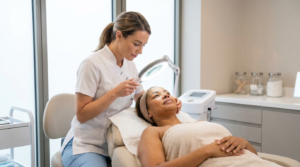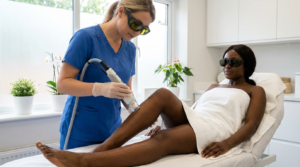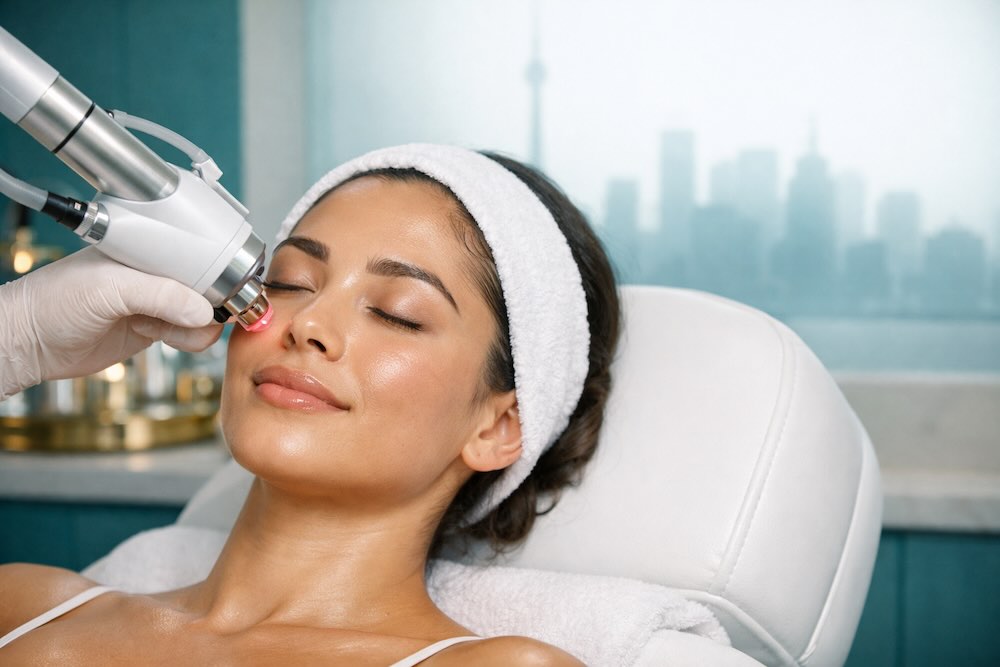
The best laser treatments for acne scars in Toronto include fractional CO2 laser, Nd:YAG (1064 nm), fractional Erbium YAG, and radiofrequency microneedling devices like Morpheus8. The right choice depends on your scar type, skin tone, and how much downtime you can manage. Most patients see meaningful improvement within 3 to 6 sessions, especially when treatment starts before scar tissue becomes deeply fibrotic.
Key Takeaways
- Fractional CO2 laser is generally the strongest option for moderate to severe acne scars, but it comes with 5 to 7 days of downtime.
- Nd:YAG (1064 nm) lasers are the safest choice for darker skin tones (Fitzpatrick IV to VI) because the wavelength minimizes melanin absorption.
- Fractional Erbium YAG offers a middle ground: roughly 60 to 75% improvement in scar appearance with only 3 to 5 days of recovery.
- Combination therapy (laser plus microneedling or chemical peels on alternating schedules) tends to outperform any single treatment.
- Early treatment matters. Newer, less established scars respond significantly better to laser remodeling than older, deeply fibrotic ones.
- Accutane users must wait at least 6 months after stopping the medication before undergoing laser scar treatment.
- Daily SPF 30+ is non-negotiable after any laser session, even when the skin surface looks intact.
- Toronto has a strong concentration of medically supervised clinics offering multiple laser platforms, which gives patients real options for customized treatment plans.
What Causes Acne Scars and Why Are They So Hard to Treat?
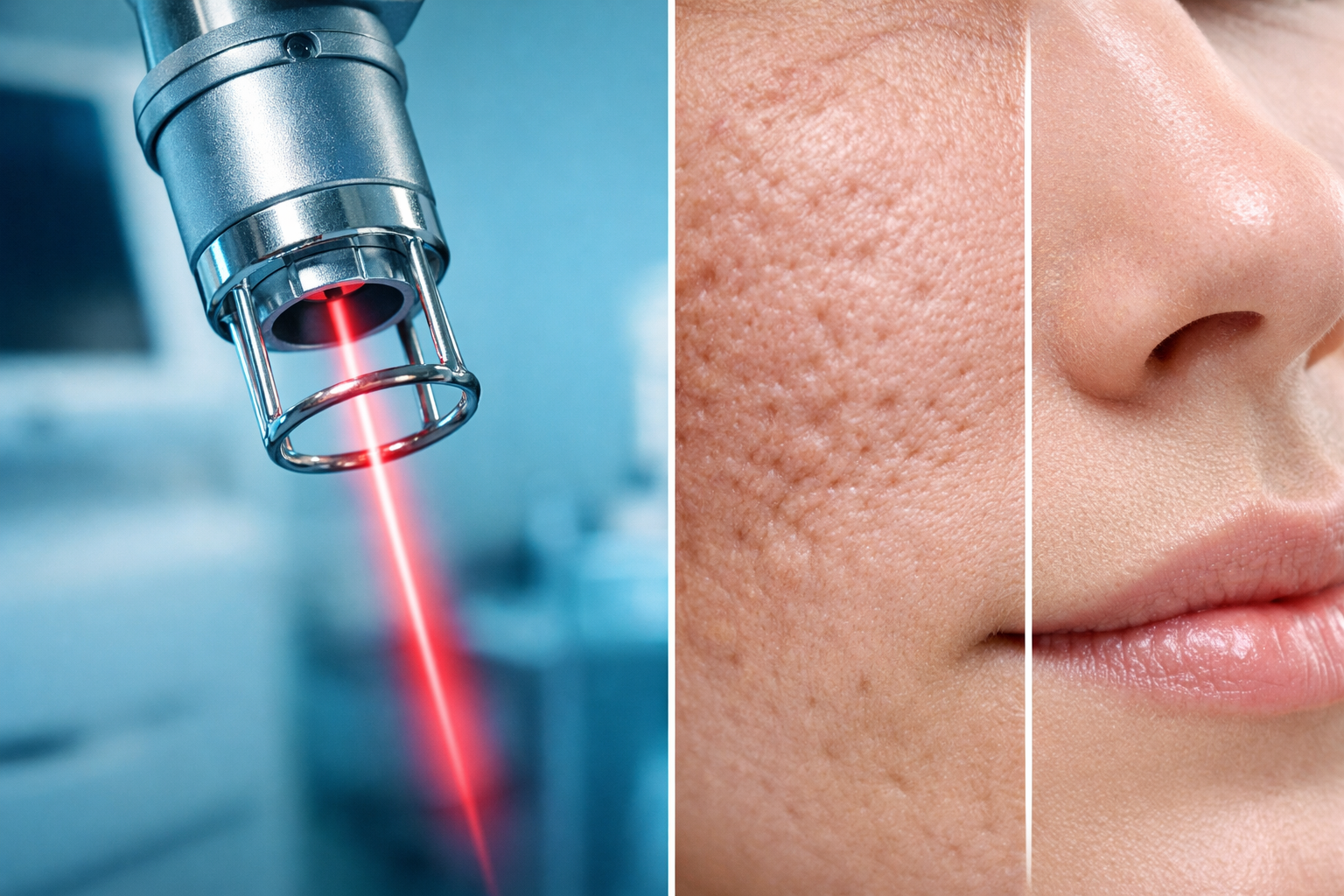
Acne scars form when inflammatory acne damages the deeper layers of the skin, specifically the dermis, and the body’s repair process doesn’t quite restore the original architecture. The result is either a loss of collagen (atrophic scars like ice pick, boxcar, or rolling scars) or an overproduction of it (hypertrophic or keloid scars). Most people dealing with post-acne skin concerns have a mix of types, which is part of why treatment gets complicated. Our guide to the types of acne and how each is treated explains the breakouts behind the scars. If you are still getting breakouts as well as scars, our guide to adult acne covers why adults break out and how to calm the skin before scar treatment begins.
The difficulty isn’t just cosmetic. Scar tissue behaves differently from normal skin. It lacks the organized collagen structure that gives healthy skin its smooth appearance, and once that disorganization becomes established, topical products alone can’t reverse it. This is where energy-based treatments, particularly lasers, become genuinely useful. They work by triggering controlled injury at precise depths, prompting the skin to rebuild collagen in a more organized way.
Common acne scar types treated with lasers:
- Ice pick scars: Deep, narrow, pitted scars. Often the hardest to treat.
- Boxcar scars: Wider, flat-bottomed depressions with defined edges.
- Rolling scars: Broad, wave-like depressions caused by fibrous bands beneath the skin.
- Hypertrophic scars: Raised, firm scars from excess collagen production.
- Post-inflammatory hyperpigmentation (PIH): Technically not a true scar, but often treated alongside scarring, and it helps to understand how it compares with other pigment concerns in our guide to hyperpigmentation versus melasma.
The guiding clinical principle is straightforward: the deeper the problem, the deeper the treatment needs to reach. Superficial discoloration might respond to a well-formulated chemical peel, but rolling or boxcar scars almost always require laser energy that penetrates into the mid to deep dermis.
Which Laser Treatments for Acne Scars Are Most Effective in Toronto?
Toronto clinics in 2026 offer several well-established laser platforms for acne scar revision. Each has a different mechanism, depth of action, and recovery profile. No single device works best for every patient.
Fractional CO2 Laser
Fractional CO2 is widely considered the benchmark for treating moderate to severe atrophic acne scars. It works by creating thousands of microscopic columns of thermal injury in the skin while leaving surrounding tissue intact. This fractional approach accelerates healing compared to fully ablative resurfacing, but it still delivers enough energy to stimulate substantial collagen remodeling.
Toronto clinics frequently recommend CO2 laser for patients with fair to medium skin tones who have significant textural irregularity and can accommodate about a week of downtime. Results are often visible after a single session, though most practitioners recommend 2 to 3 treatments spaced 6 to 8 weeks apart for optimal outcomes. Devices like CO2RE are used at several Toronto clinics specifically for their ability to treat both the surface and mid-layers simultaneously.
Best for: Moderate to severe boxcar and rolling scars in Fitzpatrick skin types I to III.
Downtime: Typically 5 to 7 days of redness, peeling, and sensitivity.
Nd:YAG Laser (1064 nm)
The long-pulsed Nd:YAG at 1064 nm is widely regarded as the gold standard for acne scar treatment in patients with darker skin tones. Its wavelength penetrates deeply into the dermis while being poorly absorbed by melanin, which dramatically reduces the risk of post-inflammatory hyperpigmentation or unwanted pigment changes. This makes it particularly valuable for Fitzpatrick types IV through VI, a demographic that has historically been underserved by more aggressive ablative lasers.
The Aerolase Neo Elite, a newer Nd:YAG platform using 650-microsecond pulse technology, delivers powerful energy without overheating surrounding tissue. It’s often described as a no-downtime option, with patients experiencing only mild redness or warmth that resolves within a few hours. For patients with busy schedules or those managing active inflammation alongside scarring, this is a practical and clinically sound choice.
Best for: All skin tones, especially Fitzpatrick IV to VI. Active acne combined with early scarring.
Downtime: Minimal. Most patients return to normal activity the same day.
Fractional Erbium YAG Laser
The fractional Erbium YAG sits between CO2 and Nd:YAG in terms of aggressiveness. It’s ablative but with a higher affinity for water absorption than CO2, which means it removes tissue more precisely with less thermal spread. Clinically, this translates to a more controlled treatment with a somewhat gentler recovery. Patients can expect roughly 60 to 75% improvement in scar appearance with about 3 to 5 days of downtime.
Fotona’s dual-laser system, used at several Toronto clinics, combines Nd:YAG and Er:YAG in a single treatment protocol. The Nd:YAG targets active inflammation and bacteria, while the Er:YAG resurfaces and stimulates collagen for scar revision. This dual approach is particularly useful for patients who are still experiencing occasional breakouts alongside established scarring.
Best for: Mild to moderate scarring in patients who want meaningful results with a shorter recovery than CO2.
Downtime: 3 to 5 days.
Radiofrequency Microneedling (Morpheus8)
Morpheus8 combines fractional microneedling with radiofrequency energy delivered directly into the dermis. It’s technically not a laser, but it’s frequently included in laser treatment discussions because it addresses similar concerns through a complementary mechanism. The RF energy heats the deep dermis and subcutaneous tissue, promoting collagen and elastin remodeling without significant surface disruption.
For acne scars, Morpheus8 is particularly effective for rolling scars and overall skin laxity that often accompanies long-standing scarring. It’s also safe across all skin tones, which makes it a strong option when CO2 laser isn’t appropriate. Many Toronto clinics offer Morpheus8 in Toronto as a standalone treatment or as part of a combination protocol.
Best for: Rolling scars, skin laxity, patients with darker skin tones.
Downtime: 2 to 4 days of mild redness and swelling.
How Do Toronto Clinics Choose the Right Laser for Your Skin?
A reputable Toronto clinic will never recommend a laser based on what’s available or what’s most profitable. The assessment process should be individualized and methodical.
What a proper consultation should cover:
- Scar classification: Ice pick, boxcar, rolling, hypertrophic, or mixed. Each responds differently to different wavelengths and depths.
- Fitzpatrick skin type: This determines which lasers are safe and which carry risk of pigmentary complications.
- Active acne status: Treating active breakouts and established scars simultaneously requires a different approach than treating scars alone.
- Medical history: Accutane use within the past 6 months is a firm contraindication. Certain autoimmune conditions, blood thinners, and photosensitizing medications also affect eligibility.
- Downtime tolerance: A patient who can’t take time off work for a week is not a good candidate for fractional CO2, regardless of how effective it might be for their scar type.
- Previous treatments: Prior laser sessions, chemical peels, or microneedling affect how the skin will respond and what’s appropriate next.
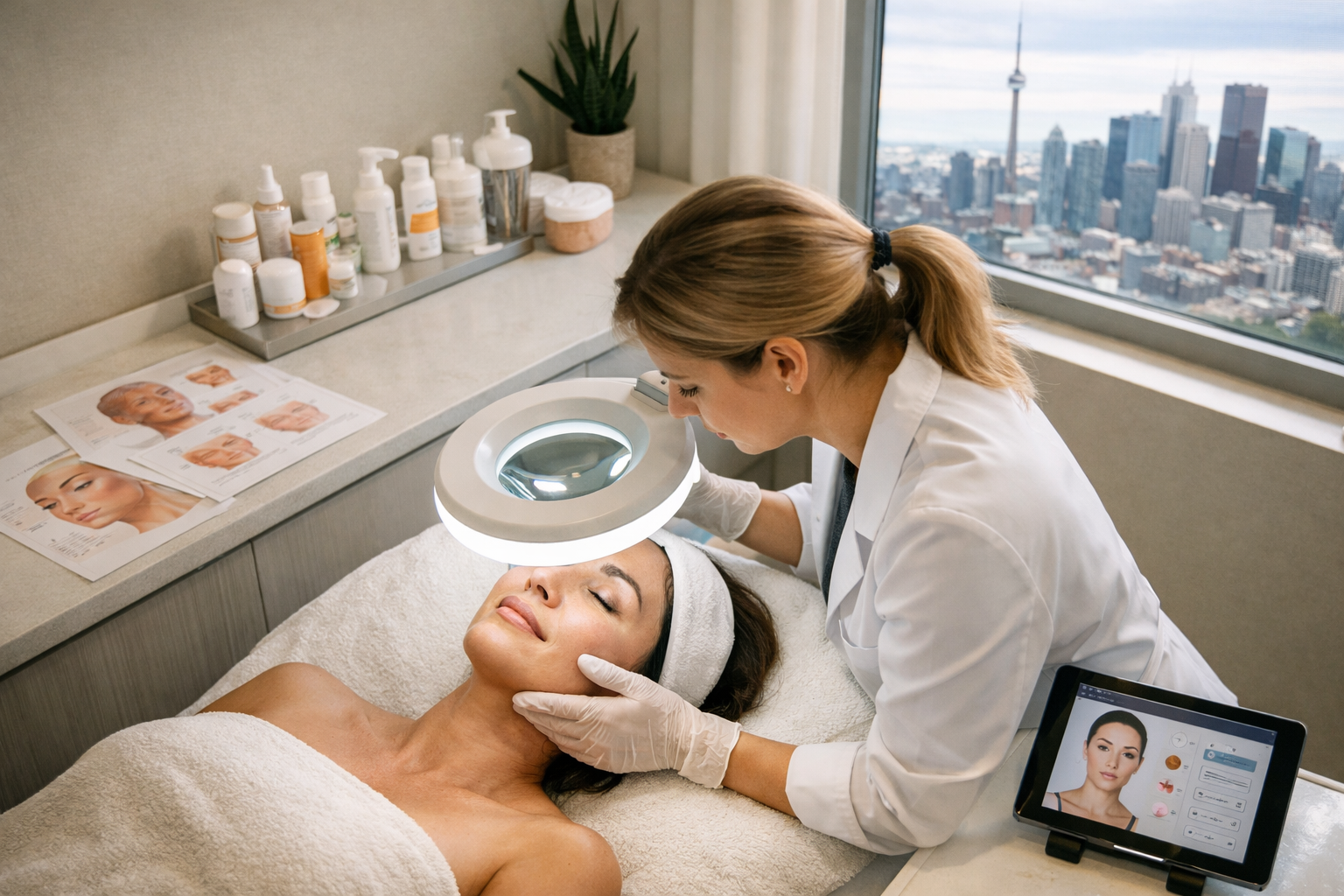
For a comprehensive starting point, a Toronto skin treatment consultation allows practitioners to assess all of these factors before recommending a protocol.
Common mistake: Choosing a clinic based on price alone. Laser treatments for acne scars require calibrated settings, proper skin assessment, and clinical oversight. An undertreated session wastes money. An overtreated one can cause burns, scarring, or hyperpigmentation that’s harder to fix than the original concern.
What Results Can You Realistically Expect from Acne Scar Laser Treatment?
Laser treatments for acne scars produce real, measurable improvement, but “complete erasure” is rarely an honest promise. Here’s what the clinical picture actually looks like.
Realistic outcome expectations by scar type:
| Scar Type | Best Laser Option | Expected Improvement | Sessions Needed |
|---|---|---|---|
| Rolling scars | Morpheus8, CO2 | 50 to 80% | 3 to 4 |
| Boxcar scars | Fractional CO2, Er:YAG | 40 to 70% | 2 to 4 |
| Ice pick scars | CO2 (with TCA cross) | 30 to 60% | 3 to 6 |
| Hypertrophic scars | Nd:YAG, pulsed dye | 50 to 75% | 3 to 5 |
| PIH (dark spots) | Nd:YAG, IPL | 60 to 90% | 2 to 4 |
Results are cumulative. Most patients notice progressive improvement over several months after each session because collagen remodeling continues for 3 to 6 months post-treatment. So the final result from a session done in January might not be fully visible until April or May.
Early treatment also significantly improves outcomes. Newer scars, those less than 1 to 2 years old, haven’t yet developed the dense fibrous architecture that makes older scars more resistant to remodeling. Starting laser treatment while scars are still relatively fresh gives the skin a much better chance at meaningful correction.
How Does Combination Therapy Improve Acne Scar Outcomes?
Laser alone is effective, but combining it with complementary treatments on alternating schedules tends to produce better results than any single modality. Toronto practitioners increasingly recommend multi-modal protocols for patients with mixed scar types or significant textural irregularity.
Common combination approaches:
- Laser + microneedling: Microneedling stimulates superficial collagen production and enhances product absorption. When alternated with laser sessions every 4 to 6 weeks, it can accelerate overall skin remodeling.
- Laser + PRP microneedling: Adding platelet-rich plasma to microneedling sessions introduces growth factors that support tissue repair and may reduce downtime after laser treatments.
- Laser + chemical peels: Medical-grade peels address superficial pigmentation and texture between laser sessions, keeping the skin in an active remodeling state.
- Laser + collagen therapy: Supportive collagen-stimulating treatments between sessions can help maintain and extend laser results.
The key is spacing. Combining treatments too aggressively can overwhelm the skin’s healing capacity and increase complication risk. A well-structured protocol staggers treatments to allow adequate recovery between each modality.
What Should You Do Before and After Laser Treatment for Acne Scars?
Preparation and aftercare are perhaps just as important as the treatment itself. Skipping either can compromise results or, in some cases, cause complications.
Before Treatment
- Stop retinoids 5 to 7 days before your session. Retinol and tretinoin increase skin sensitivity and can heighten the risk of irritation or uneven treatment response.
- Avoid sun exposure for at least 2 weeks prior. Tanned skin has elevated melanin levels, which increases the risk of burns and pigmentary changes with most laser types.
- Discontinue Accutane at least 6 months before treatment. This is a firm clinical guideline, not a suggestion. Isotretinoin alters sebaceous gland function and skin healing in ways that can lead to abnormal scarring post-laser.
- Inform your provider about all medications. Certain antibiotics, NSAIDs, and supplements (like fish oil or vitamin E) can affect bleeding and healing.
- Arrive with clean skin. No makeup, SPF, or skincare products on the day of treatment.
After Treatment
- Apply broad-spectrum SPF 30+ every single day, even indoors, even in winter. The skin is actively regenerating after laser treatment, and UV exposure during this period can trigger new hyperpigmentation that undoes the results.
- Keep the skin hydrated. Gentle, fragrance-free moisturizers support the healing barrier. Avoid anything with active ingredients (acids, retinoids, vitamin C) until the skin has fully settled, usually 5 to 10 days depending on treatment intensity.
- Don’t pick or peel flaking skin. It’s tempting, but premature removal of healing tissue can cause new scarring or infection.
- Avoid intense heat (saunas, hot yoga, steam rooms) for at least a week post-treatment.
- Follow up as scheduled. Skipping follow-up appointments means your provider can’t assess healing or adjust the protocol if needed.
For patients interested in supporting their skin between sessions, treatments like skin resurfacing or skin rejuvenation can complement a laser protocol without overlapping aggressively.
How Much Do Laser Treatments for Acne Scars Cost in Toronto?
Pricing in Toronto varies considerably based on the device used, the size of the treatment area, the clinic’s location, and the provider’s level of expertise. The following are general estimates for 2026, not guarantees.
| Treatment | Estimated Cost Per Session (Toronto) |
|---|---|
| Fractional CO2 laser | $800 to $2,000+ |
| Nd:YAG (Aerolase Neo Elite) | $400 to $900 |
| Fractional Erbium YAG | $600 to $1,500 |
| Morpheus8 (RF microneedling) | $700 to $1,800 |
| Combination session (laser + peel or microneedling) | $900 to $2,500+ |
Most patients require 3 to 6 sessions for meaningful improvement, so the total investment is worth factoring in from the start. Package pricing is often available and can reduce per-session costs by 15 to 25%.
Laser acne scar treatments are not covered by OHIP or most private insurance plans in Ontario, as they’re classified as cosmetic procedures. Some clinics offer financing options for patients who prefer to spread costs over time.
Decision rule: If budget is a significant constraint, start with Nd:YAG or fractional Erbium YAG. Both offer meaningful improvement at a lower cost and risk profile than CO2, and they can always be followed by more aggressive treatment later if needed.
Are There Alternatives to Laser for Acne Scars in Toronto?
Laser isn’t the only path. For patients who aren’t candidates for laser treatment, or who want to complement their protocol, several non-laser options produce legitimate results.
- Microneedling: Creates controlled micro-injuries to stimulate collagen. Effective for mild to moderate rolling and boxcar scars. Lower cost and minimal downtime, but typically requires more sessions than laser.
- Chemical peels: Medical-grade peels (TCA, glycolic, salicylic) address superficial scarring and pigmentation. Best for mild scarring or as a maintenance treatment between laser sessions.
- Dermal fillers: Temporary volume restoration under depressed scars. Not a permanent fix, but can be useful for deep rolling scars while laser remodeling is ongoing.
- Subcision: A minor surgical procedure that breaks up fibrous bands beneath rolling scars. Often combined with laser or microneedling for enhanced results.
- Dermaplaning: Addresses superficial texture and vellus hair. Not effective for true scar tissue, but can improve overall skin smoothness and product absorption.
The honest answer is that most patients with significant acne scarring benefit from a combination of approaches over time, rather than a single definitive treatment.
Frequently Asked Questions About Acne Scar Laser Treatment in Toronto
Q: How many laser sessions do I need for acne scars?
Most patients need 3 to 6 sessions, spaced 4 to 8 weeks apart, depending on scar severity and the laser type used. Mild scarring may respond in 2 to 3 sessions; deeper or more extensive scarring typically requires more.
Q: Is laser treatment for acne scars painful?
Most clinics apply a topical numbing cream 30 to 45 minutes before treatment. Patients typically describe the sensation as warmth, snapping, or mild stinging rather than sharp pain. Comfort varies by device and treatment intensity.
Q: Can laser treatment make acne scars worse?
In the hands of an experienced provider using appropriate settings for your skin type, serious complications are uncommon. However, using the wrong laser for darker skin tones, overtreating, or treating over active infections can cause hyperpigmentation, burns, or new scarring. Proper assessment before treatment is essential.
Q: What’s the best laser for dark skin tones with acne scars?
The Nd:YAG (1064 nm) laser is widely considered the safest and most effective option for Fitzpatrick skin types IV through VI. It penetrates deeply while minimizing melanin absorption, which reduces the risk of pigmentary complications.
Q: Can I have laser treatment if I still have active acne?
Yes, in many cases. Certain lasers, particularly Nd:YAG, can address both active inflammation and existing scarring simultaneously. However, your provider will assess whether active breakouts are controlled enough to proceed safely.
Q: How long before I see results from laser acne scar treatment?
Initial improvement in texture and tone is often visible within 2 to 4 weeks. Because collagen remodeling continues for 3 to 6 months after each session, the full result may not be apparent until several months after your last treatment.
Q: Is there a minimum age for laser acne scar treatment in Toronto?
Most clinics treat patients 18 and older without restriction. Some will treat younger patients with parental consent, particularly if acne scarring is causing significant psychological distress. There’s no standard upper age limit.
Q: What happens if I skip the SPF after laser treatment?
UV exposure on skin that’s actively remodeling after laser treatment can trigger post-inflammatory hyperpigmentation, essentially creating new dark spots that may be harder to treat than the original scars. SPF is not optional during the recovery period.
Q: How do I choose between clinics in Toronto for acne scar laser treatment?
Look for clinics with licensed medical professionals overseeing treatments, multiple laser platforms (so the recommendation is based on your skin, not what’s available), transparent pricing, and a thorough consultation process before any commitment.
Q: Can I combine laser with Botox or fillers?
Yes, though timing matters. Most providers recommend spacing laser sessions and injectable treatments by at least 2 weeks to allow adequate healing and avoid interference with results. A Toronto cosmetic injections consultation can help map out a sequenced plan.
Conclusion: Taking the Next Step Toward Clearer Skin
Acne scars are genuinely treatable in 2026, and Toronto has no shortage of qualified clinics with the technology to address them effectively. The most important variables are choosing the right laser for your scar type and skin tone, starting treatment before scarring becomes deeply established, and following through with a consistent protocol that includes proper aftercare.
Actionable next steps:
- Book a consultation with a medically supervised Toronto clinic that offers multiple laser platforms. A proper assessment is the only way to know which treatment is actually right for your skin.
- Document your scars with clear photos in natural lighting before treatment begins. This makes it much easier to track progress objectively over time.
- Ask specifically about combination protocols. A plan that pairs laser with microneedling or peels on an alternating schedule will almost always outperform laser alone.
- Plan your calendar. If you’re considering fractional CO2 or Erbium YAG, schedule sessions during periods when you can manage 5 to 7 days of visible recovery.
- Start your SPF habit now. Whether you’re pre-treatment or post-treatment, daily broad-spectrum SPF 30+ protects your skin and preserves results.
For a full overview of available laser skin treatments or to explore specific acne scar treatment options, Canada MedLaser’s Toronto locations offer consultations with experienced practitioners who can build a protocol around your specific concerns.
Skin improvement takes time and consistency. But with the right laser protocol, meaningful change in acne scar appearance is well within reach.
Trust our skin and laser guides? Add Canada MedLaser as a preferred source on Google.