
Yes, laser hair removal can meaningfully reduce hormonal hair growth caused by PCOS, though it rarely eliminates it permanently. Most patients see roughly 50 to 79 percent reduction in visible hair after a full series of 6 to 10 sessions, with 70 to 80 percent reduction being a realistic target when treatment is paired with medical management of androgens. Because PCOS keeps stimulating dormant follicles, ongoing maintenance sessions are usually required.
Key Takeaways
- Laser hair removal is considered one of the most effective cosmetic treatments for PCOS-related hirsutism, especially on the face, jawline, neck, chest, and abdomen.
- Expect 50 to 79 percent reduction in hair growth 6 months after completing an initial series; 70 to 80 percent is a reasonable best-case outcome.
- PCOS patients typically need more sessions (often 8 to 12) than non-PCOS clients, plus maintenance every 6 to 12 weeks indefinitely.
- Combining laser with medical therapy (spironolactone, oral contraceptives, metformin, or inositol) significantly improves and sustains results.
- Diode and Nd:YAG lasers tend to work best across a range of skin tones; IPL is generally less effective for stubborn hormonal hair.
- Results plateau without ongoing care because PCOS continues to convert vellus hair to terminal hair throughout life.
- A medical consultation is non-negotiable. Hormonal status, medications, and skin type all influence safety and outcome.
Why PCOS Causes Stubborn Hair Growth in the First Place
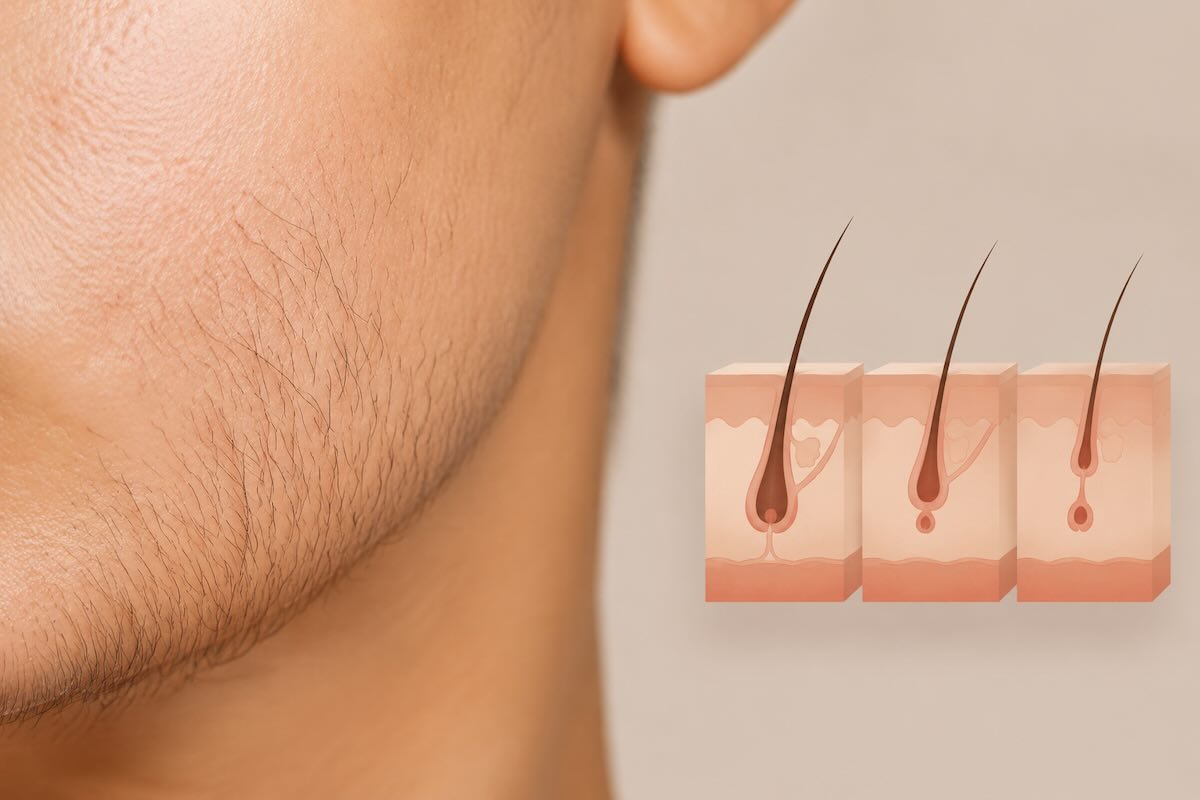
Polycystic ovary syndrome triggers excess androgen production, mainly testosterone and DHT, which push fine vellus hairs to transform into thicker, darker terminal hairs in androgen-sensitive zones. That’s the short version. The longer version involves insulin resistance, SHBG suppression, and the way follicles respond to circulating hormones, but the practical takeaway is simple: as long as the hormonal driver is active, follicles keep getting recruited.
This matters for laser hair removal because the technology only destroys follicles that are actively producing pigmented hair at the time of treatment. New follicles activated by ongoing androgen exposure aren’t on the same timeline, which is why PCOS patients sometimes feel like they’re chasing a moving target. They more or less are.
Common areas affected:
- Upper lip, chin, sideburns, and jawline
- Neck (front and back)
- Chest and around the areola
- Abdomen, especially the linea alba
- Inner thighs and lower back
- Buttocks
Does Laser Hair Removal for PCOS Actually Work?
Yes, it works, but the definition of “works” needs adjustment for PCOS. For someone without a hormonal condition, a standard 6 to 8 session series can yield 80 to 90 percent permanent reduction. For someone with PCOS, the same protocol typically delivers 50 to 79 percent reduction at the 6-month mark, with maintenance sessions required to hold those gains.
Why the gap? Two reasons. First, PCOS continuously activates new follicles that weren’t visible during earlier sessions. Second, finer or lighter hairs (sometimes called peach fuzz turning terminal) don’t absorb laser energy as efficiently, so they’re harder targets. The good news is that the hairs that do get treated tend to grow back finer, sparser, and slower, which is a meaningful quality-of-life change even when total clearance isn’t realistic.
Decision rule: choose laser hair removal if you’re committed to ongoing maintenance and willing to address the hormonal component medically. Skip it (or delay it) if you expect a one-and-done outcome and aren’t open to long-term care.
What Results Can PCOS Patients Realistically Expect?
A realistic outcome at 6 months post-series:
| Outcome metric | Non-PCOS patients | PCOS patients |
|---|---|---|
| Hair reduction after full series | 80–90% | 50–79% |
| Sessions needed initially | 6–8 | 8–12 |
| Maintenance frequency | Annually or rarely | Every 6–12 weeks |
| Permanent clearance likely? | Often yes | Rarely 100%, but substantial |
| Improvement in hair thickness/color | Significant | Significant |
Most patients describe the change as “manageable instead of constant.” The daily plucking, the lunchtime shaving, the wax appointments every two weeks, all of that usually drops dramatically. Some patients report being able to space facial maintenance to once every two or three months, which is a meaningful shift.
One caveat worth mentioning: a small percentage of PCOS patients experience paradoxical hypertrichosis, where laser treatment seems to stimulate fine hair growth in adjacent areas (typically on the face, neck, or upper back). It’s uncommon, but not so rare that it should be ignored. A skilled provider will adjust settings or switch wavelengths if this happens.
How Many Sessions Do PCOS Patients Need?
Most PCOS patients need 8 to 12 initial sessions spaced 4 to 8 weeks apart, followed by ongoing maintenance every 6 to 12 weeks. Compare that to the 6 to 8 sessions typical for non-hormonal hair growth.
Why more sessions? Because hair on the face and body cycles through anagen, catagen, and telogen phases at different rates, and laser only effectively damages follicles in anagen. With PCOS adding new follicles to the rotation continuously, more passes are needed to catch each follicle in its growth phase.
A typical PCOS protocol at a reputable clinic looks like this:
- Consultation and test patch to confirm skin type, hair color, and tolerance.
- Sessions 1 through 4 spaced every 4 to 6 weeks on the face, every 6 to 8 weeks on the body.
- Sessions 5 through 8 with widened intervals as growth slows.
- Sessions 9 through 12 based on response.
- Maintenance every 6 to 12 weeks, sometimes longer once stable.
For a deeper look at session structure and area-specific protocols, our facial hair removal service page breaks down how the most common PCOS-affected zones are treated.
Which Laser Technology Works Best for PCOS Hair?
Diode and Nd:YAG lasers are generally the most effective for PCOS-related hair, with diode favored for lighter skin tones and Nd:YAG preferred for medium to deep skin tones. Alexandrite lasers can be excellent for fair skin with dark hair but are riskier on darker complexions. If your skin tone is deeper, our guide to laser hair removal for dark skin explains why the Nd:YAG is the safer choice.
Quick comparison:
- Diode (around 800–810 nm): Versatile, good penetration, effective for coarse hair on Fitzpatrick I to IV skin.
- Nd:YAG (1064 nm): Safer for Fitzpatrick IV to VI skin, deeper penetration, sometimes slightly less efficient on fine hair.
- Alexandrite (755 nm): Strong on light skin with dark hair, faster treatment times, less suitable for tanned or darker skin.
- IPL (intense pulsed light): Less precise, generally not recommended as a primary treatment for stubborn hormonal hair. It can help but rarely delivers the same density of reduction.
Most modern clinics use platforms with multiple wavelengths so the provider can switch based on the area being treated. If a clinic only offers one device and one wavelength, that’s a yellow flag for PCOS patients. You can review the technology used in clinic to understand what’s actually being applied to your skin.

Does Combining Laser With Medication Improve Results?
Yes, and this is probably the single biggest factor in long-term success. Laser hair removal addresses the visible follicles, while medical therapy reduces the androgenic drive that keeps creating new ones. Used together, the effect compounds.
Common medical approaches a physician may discuss:
- Combined oral contraceptives to suppress ovarian androgen production.
- Spironolactone as an androgen receptor blocker, often 50 to 200 mg daily.
- Metformin for insulin resistance, which can indirectly lower androgens.
- Inositol (myo and d-chiro) as a nutraceutical option with growing evidence for PCOS.
- Topical eflornithine to slow facial hair regrowth between sessions.
- Finasteride or other 5-alpha reductase inhibitors in select cases under specialist supervision.
A reasonable framework: get the hormonal piece evaluated by an endocrinologist or gynecologist first, then start laser with that foundation in place. Patients who begin medication 3 to 6 months before laser often see noticeably better and more durable results.
Common mistake: starting laser without any hormonal workup, expecting permanent clearance, then feeling frustrated when hair returns. The laser worked. The hormones simply recruited new follicles.
Is Laser Hair Removal for PCOS Safe?
Laser hair removal is considered safe for PCOS patients when performed by trained professionals on appropriate skin types with proper settings. The main risks are temporary, including redness, mild swelling around follicles (perifollicular edema), and short-term pigment changes. For a complete overview, see our guide to laser hair removal side effects.
Specific PCOS-related safety considerations:
- Acne flare-ups: Many PCOS patients have hormonal acne, a common form of adult acne. Active inflammatory lesions in the treatment area should be controlled before laser.
- Isotretinoin use: Most providers wait 6 months after isotretinoin (Accutane) before treating to reduce scarring risk.
- Pregnancy: Laser is generally avoided during pregnancy; PCOS patients trying to conceive should discuss timing.
- Photosensitizing medications: Some PCOS-related supplements and antibiotics can increase light sensitivity.
- Melasma risk: PCOS patients on hormonal therapy can be prone to pigment changes; a skilled operator will adjust accordingly.
If you have concerns about pigmentation alongside hair removal, our overview of pigmentation treatments is worth a read.
Cost and Time Commitment: What to Budget
PCOS patients should budget for a longer commitment than the average laser package advertises. A practical breakdown:
| Treatment area | Sessions (initial) | Approx. range per session | Maintenance |
|---|---|---|---|
| Upper lip and chin | 8–12 | $75–$200 | Every 6–10 weeks |
| Full face and neck | 8–12 | $200–$400 | Every 6–10 weeks |
| Chest and abdomen | 8–10 | $250–$500 | Every 8–12 weeks |
| Full body | 8–12 | $700–$1,500 | Every 8–12 weeks |
Pricing varies significantly by region, technology, and clinic. Our GTA laser hair removal cost guide lays out typical prices by area and how packages affect the total. Many clinics offer package pricing that reduces per-session costs by 15 to 30 percent. Some also offer membership models that make ongoing maintenance more predictable, which matters a lot when you’re looking at a multi-year horizon.
For broader coverage, packages like full body laser hair removal can be more economical than booking single zones over time, especially for PCOS patients with widespread growth.
Comparing Laser to Other Hair Removal Options for PCOS
| Method | Effectiveness for PCOS | Pain/discomfort | Long-term cost | Best for |
|---|---|---|---|---|
| Laser hair removal | High (50–80% reduction) | Moderate | Moderate to high upfront, lower long-term | Most PCOS patients |
| Electrolysis | Highest (permanent per follicle) | High | Very high (time-intensive) | Small areas, white/grey hair |
| Waxing/sugaring | Temporary | Moderate to high | Recurring | Short-term solutions |
| Depilatory creams | Temporary | Low | Low recurring | Sensitive to other methods |
| Shaving | Temporary | None | Very low | Daily maintenance only |
| Threading | Temporary | Moderate | Low recurring | Facial detail work |
Electrolysis is the only method that produces truly permanent hair removal regardless of color, which makes it valuable for finishing work on white, grey, blonde, or red hairs that laser can’t target. Many PCOS patients use laser for bulk reduction and electrolysis for the remaining stubborn hairs. That combination is, in practice, the gold standard.
Recommendations: How to Get the Most From Treatment
- Get a hormonal workup before starting. Knowing your testosterone, DHEA-S, SHBG, and insulin status helps your provider set realistic expectations and your physician fine-tune medical therapy.
- Choose a clinic with multiple laser platforms. Diode plus Nd:YAG coverage is ideal for PCOS patients across skin tones.
- Commit to the full series. Stopping at session 4 or 5 because results “look good enough” almost always leads to faster regrowth.
- Plan for maintenance. Build it into your budget and schedule from day one.
- Track progress with photos. Memory is unreliable; monthly photos make it obvious whether the protocol is working.
- Avoid sun exposure and self-tanners for at least two weeks before and after each session. Our laser hair removal aftercare guide covers the full before-and-after routine.
- Don’t wax, pluck, or thread between sessions. Shaving is fine; anything that removes the follicle disrupts treatment.
- Address adjacent skin concerns like hormonal acne or pigmentation in parallel rather than separately.
If you’re considering booking, a structured laser hair removal consultation is the most efficient way to get a personalized plan rather than guessing from general information.
FAQs
How long until I see results from laser hair removal for PCOS?
Most patients notice slower regrowth and finer hairs after 2 to 3 sessions. Visible density reduction typically becomes obvious by sessions 4 to 6.
Will laser hair removal stop PCOS hair growth permanently?
Not entirely. Laser provides significant long-term reduction, but PCOS continues to activate new follicles, so ongoing maintenance is needed for most patients.
Is laser hair removal safe while taking spironolactone or birth control?
Generally yes. Both medications are commonly used during laser treatment courses and may actually improve results. Confirm with your provider and prescribing physician.
Can laser hair removal cause more hair to grow?
Paradoxical hypertrichosis is rare but documented, particularly on the face and neck. A skilled operator can adjust settings or wavelength if it occurs.
Does laser hair removal help with the dark spots PCOS hair leaves behind?
Indirectly, yes. Reducing hair growth and the repeated trauma of shaving or waxing allows post-inflammatory pigmentation to fade. Dedicated pigmentation treatments can accelerate this.
Is electrolysis better than laser for PCOS?
Electrolysis is more permanent per follicle but extremely time-intensive. Most PCOS patients benefit from laser for bulk reduction and electrolysis for stubborn or non-pigmented hairs.
Can I do laser if I’m trying to get pregnant?
Laser itself isn’t linked to fertility concerns, but treatment is paused during pregnancy. Many patients complete a series before trying to conceive.
What’s the worst-case outcome?
Temporary redness, mild burns from incorrect settings, or pigment changes that usually resolve. Permanent scarring is uncommon with qualified providers.
Do I need to stop other PCOS treatments before laser?
No, with rare exceptions like isotretinoin. Hormonal medications, metformin, and most supplements are compatible.
How do I know if my clinic is qualified to treat PCOS hair?
Ask how many PCOS patients they treat monthly, which wavelengths they use, whether they offer test patches, and how they handle paradoxical hypertrichosis.
Expert Insights
Clinicians who treat PCOS hirsutism regularly tend to emphasize one point: laser hair removal is a long game, not a sprint. The patients who report the highest satisfaction are usually the ones who reframed the goal early. Instead of “make all the hair go away forever,” they targeted “make this manageable and predictable.” That mental shift, combined with consistent medical care, is what separates frustrated patients from satisfied ones.
A practical pattern worth noting: patients who address insulin resistance (through metformin, inositol, dietary changes, or some combination) often see their laser results hold longer between maintenance sessions. The mechanism makes sense, lower insulin means lower androgen production means fewer recruited follicles, though the effect varies by individual.
“PCOS hair management isn’t a single treatment, it’s a system. Laser handles the visible follicles, medication handles the hormonal drive, and lifestyle handles the metabolic background. Pull one piece out and the system gets shaky.”
Related Reading
- Facial hair laser removal details
- Laser hair removal for women
- Full body laser hair removal packages
- Underarm laser hair removal
- Bikini and Brazilian laser options
- Book a personalized consultation
Conclusion: Your Next Steps
Laser hair removal for PCOS is one of the most effective tools available for managing hormonal hair growth, but only when it’s used as part of a broader strategy. Expect meaningful reduction (50 to 79 percent realistically, 70 to 80 percent in best cases), plan for ongoing maintenance, and pair treatment with hormonal evaluation by a physician.
Actionable next steps:
- Book a hormonal panel with your family doctor or endocrinologist if you haven’t had one recently.
- Schedule a consultation with a clinic that offers both diode and Nd:YAG technology and treats PCOS patients regularly.
- Ask for a test patch before committing to a package.
- Photograph your starting point and track every 4 weeks.
- Build maintenance sessions into your annual schedule and budget from the start.
Hormonal hair growth doesn’t have to dictate daily routines. With the right combination of laser, medical management, and patience, most PCOS patients reach a place where hair is something they think about occasionally rather than constantly. That’s the actual win.
Trust our skin and laser guides? Add Canada MedLaser as a preferred source on Google.