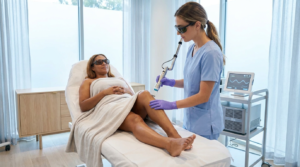
Rosacea treatment usually combines gentle daily skincare, prescription topicals or oral medication, and light-based therapy such as IPL or vascular laser, and most people notice a real difference within about 8 to 12 weeks of starting a consistent plan. In a typical case, a clinician matches the treatment to your dominant symptom, so someone with persistent redness and visible vessels follows a different path than someone with acne-like bumps. What changes the plan most is your rosacea subtype, your skin tone, your personal triggers, and how early you start.
Rosacea Treatment at a Glance
- Time to visible improvement: roughly 4 to 12 weeks for topicals, with full benefit around the 12-week mark.
- Laser and IPL course: commonly 3 to 5 sessions, spaced several weeks apart, for the redness and visible-vessel component.
- Cure status: there is no known cure, according to the Canadian Dermatology Association, so the goal is long-term control, not a one-time fix.
- Who it affects: over three million Canadians, and an estimated 415 million people worldwide.
- Recognized subtypes: four, and each one responds best to a slightly different approach.
- Most common trigger: sun exposure, followed by heat, alcohol, spicy food, and stress.
- First-line topicals: metronidazole, azelaic acid, and ivermectin for bumps; brimonidine or oxymetazoline for redness.
Key Rosacea Terms, Defined
- Rosacea: a chronic inflammatory skin condition that causes persistent central-face redness, flushing, and sometimes bumps.
- Telangiectasia: the small, visible blood vessels that often appear across the nose and cheeks.
- Papulopustular rosacea: the subtype with acne-like bumps and pustules, but no blackheads or whiteheads.
- Erythematotelangiectatic rosacea: the subtype dominated by flushing, lasting redness, and visible vessels.
- IPL (Intense Pulsed Light): broad-spectrum light that targets dilated vessels to reduce diffuse redness.
- Flare: a temporary worsening of symptoms, often set off by a specific trigger.
One honest caveat before we go further: rosacea is very individual, and what calms one person’s skin can aggravate another’s. The information here is general education, not a substitute for a medical assessment. A diagnosis from a physician or a qualified clinician should come first, because self-treating with strong acne products or harsh actives is one of the most common ways people accidentally make rosacea worse. If redness and visible vessels are your main concern, a rosacea and redness treatment consultation is the sensible starting point.
Key Takeaways
- Rosacea affects over three million Canadians and an estimated 415 million people worldwide, and it is frequently mistaken for adult acne or eczema.
- There are four recognized subtypes, and identifying yours is the foundation of any effective treatment plan.
- Common triggers include sun exposure, heat, alcohol, spicy foods, and emotional stress. Sun is the one people report most.
- Papulopustular rosacea looks like acne but does not respond to standard acne products, and benzoyl peroxide often makes it worse.
- IPL and vascular laser are among the most effective clinical options for redness and visible vessels, though they manage rather than cure.
- No single treatment works for everyone. Combination therapy is the usual standard of care.
- Rosacea is diagnosed clinically, so most people do not need lab tests or a biopsy.
- A gentle skincare routine and daily mineral sunscreen support every medical treatment.
- Left untreated, rosacea tends to progress and becomes harder to manage, so early intervention pays off.
What Exactly Is Rosacea and How Do You Know If You Have It?
Rosacea is a chronic, relapsing inflammatory skin disorder that mostly affects the central face: the cheeks, nose, chin, and forehead. The hallmark is persistent or recurrent redness, often with a burning or stinging feeling, visible blood vessels, and in some subtypes, pimple-like bumps. The Canadian Dermatology Association describes it as a condition with no known cure that can still be managed well with the right treatment and some lifestyle changes.
Knowing whether you have rosacea rather than something else usually comes down to a specific pattern:
- Persistent central facial redness that does not fully settle between flares
- Flushing episodes set off by heat, alcohol, exercise, or stress
- Visible small blood vessels across the nose and cheeks
- Bumps or pustules that look like acne but have no blackheads or whiteheads
- Eye irritation, dryness, or a gritty feeling, which points to the ocular subtype
- Skin thickening, particularly around the nose, known as rhinophyma
It typically shows up between ages 30 and 50, and women are diagnosed more often, though men tend to develop the more severe, thickening forms. If several of these signs cluster together, especially the flushing pattern and the central distribution, rosacea is the likely explanation. A dermatologist or qualified clinician can usually confirm it in a single appointment. If you are still weighing whether your symptoms are rosacea or breakouts, our guide on rosacea vs acne walks through the differences in more detail.
What Are the Four Types of Rosacea?
Dermatologists recognize four primary subtypes, and understanding which one is present is the first real step in any treatment plan. Many people have features of more than one at the same time, which is part of why a single fixed protocol rarely works for everyone.
Subtype 1 (Erythematotelangiectatic) is the most common presentation. Redness and flushing dominate, often with a burning or stinging quality, and visible capillaries frequently sit across the nose and cheeks.
Subtype 2 (Papulopustular rosacea) is the one most often confused with acne. The tell is the absence of comedones, the blackheads and whiteheads, together with a background of redness. Standard acne treatments often aggravate this subtype rather than help it.
Subtype 3 (Phymatous) is less common but more visually dramatic. Excess tissue growth thickens the skin and gives it a bumpy, irregular texture. Rhinophyma, the bulbous nose enlargement, is the most recognized example, and it develops far more often in men.
Subtype 4 (Ocular rosacea) affects the eyes and eyelids. The Canadian Dermatology Association notes that more than half of people with rosacea may have some eye involvement, and many do not realize their chronic eye irritation is connected to their skin.
What Causes Rosacea? Understanding the Root Triggers
Rosacea does not have a single, tidy cause. Current evidence points to genetics, an overactive immune response, blood-vessel changes, and environmental factors all working together. Experts still are not certain about the exact mechanism, which is worth saying plainly rather than pretending the science is fully settled.
Genetics play a real role. Rosacea tends to run in families, and it appears most easily in people of northern and eastern European descent, though it can develop in any skin colour.
The immune system is also involved. Elevated levels of cathelicidin peptides, which normally help fight infection, seem to drive the inflammatory response in rosacea-prone skin. That is one reason certain antibiotic-class medications help even when there is no infection to treat.
Demodex mites, microscopic organisms that naturally live on human skin, are found in higher numbers on rosacea-affected skin. Whether they cause the condition or simply thrive in the altered environment is still debated.
Vascular changes matter too. The blood vessels in rosacea-prone skin dilate more readily and take longer to settle, which explains the flushing and the lasting redness.
Common triggers that set off flares include:
- Sun exposure, the trigger people report most often
- Heat, including hot drinks, saunas, and hot showers
- Alcohol, red wine in particular
- Spicy foods
- Intense exercise
- Emotional stress or anxiety
- Skincare with alcohol, fragrance, or harsh exfoliants
- Wind and extreme cold
Finding your personal triggers with a simple diary is one of the most underused steps in long-term management. Our full guide to rosacea triggers to avoid breaks down the diet, skincare, and lifestyle factors in a lot more detail.
What Is the Difference Between Rosacea and Regular Acne or Skin Redness?
Rosacea and acne can look strikingly similar on the surface, but they are separate conditions with different mechanisms and different treatment needs. Mixing them up is one of the most common reasons people see no improvement with drugstore products.
General redness from eczema, contact dermatitis, or seborrheic dermatitis can also mimic rosacea. The features that point to rosacea specifically are the flushing pattern, the central-face distribution, and the visible vessels. A clinician can usually tell these apart during a visual exam. If your breakouts started in your late 20s or later, it is also worth reading about adult acne, since the two can overlap and occasionally coexist.
How Do Dermatologists Diagnose Rosacea?
Rosacea is diagnosed clinically, meaning a trained clinician can make the call from a physical exam and your history alone, without blood tests or a biopsy in most cases. The Canadian Dermatology Association uses a phenotype-based approach: one of two defining features (persistent central redness, or phymatous thickening) is enough on its own, or any two of papules and pustules, flushing, visible vessels, and eye involvement.
The process usually looks like this:
- Visual examination of the skin, noting the pattern of redness, vessels, and lesions
- Patient history, including when symptoms started, known triggers, and family history
- Symptom review covering flushing frequency, eye irritation, and skin sensitivity
- Ruling out look-alikes such as lupus, seborrheic dermatitis, perioral dermatitis, or acne
In some cases, particularly when ocular rosacea is suspected or the picture is unclear, a referral to an ophthalmologist or a skin biopsy may be suggested. Those are the exception, not the rule. A common mistake worth flagging: many people self-diagnose and start treating with harsh acne products or strong retinoids, which tends to aggravate rosacea before they ever see a clinician. Getting a confirmed diagnosis first saves time, money, and the skin barrier.
Can Rosacea Be Completely Cured or Just Managed?
Rosacea cannot be permanently cured. Both the Canadian Dermatology Association and the U.S. National Institutes of Health state plainly that there is no cure, so it is a chronic condition that calls for ongoing management rather than a finite course of treatment. That said, plenty of people reach such good control that their symptoms fade into the background of daily life.
The realistic goals of treatment are:
- Reducing how often and how severely you flare
- Softening baseline redness and visible vessels
- Preventing progression to more stubborn subtypes
- Improving quality of life, which rosacea can affect more than people expect
With consistent treatment and trigger avoidance, long stretches of remission are achievable. Some people go months or even years without a real flare. The operative word is consistent. Stopping treatment the moment skin looks calm is one of the most common reasons for relapse.
Which Prescription Medications Work Best for Different Types of Rosacea?
Prescription medication is the backbone of treatment for moderate to severe rosacea. The right choice depends heavily on the subtype and the dominant symptom, and these are physician-prescribed, so a clinician needs to guide the decision. Here is how the main options line up.
For papulopustular rosacea, topical metronidazole, azelaic acid, and ivermectin are common first-line choices, with low-dose doxycycline added for more stubborn cases. For erythematotelangiectatic rosacea, brimonidine or oxymetazoline can temporarily reduce redness within about 30 minutes, though they do not address the underlying vessel changes and are best paired with other treatments. For ocular rosacea, warm compresses, lid hygiene, and artificial tears come first, with oral antibiotics or prescription eye drops for persistent cases. For phymatous rosacea, isotretinoin may slow early tissue overgrowth, while established rhinophyma usually needs surgical or ablative laser treatment.
One important note: never start, stop, or change a prescription on your own, and if a blood-pressure medication or a steroid cream seems to be worsening your skin, raise it with the prescribing physician rather than quitting it.
Are Laser Treatments Effective for Rosacea and How Expensive Are They?
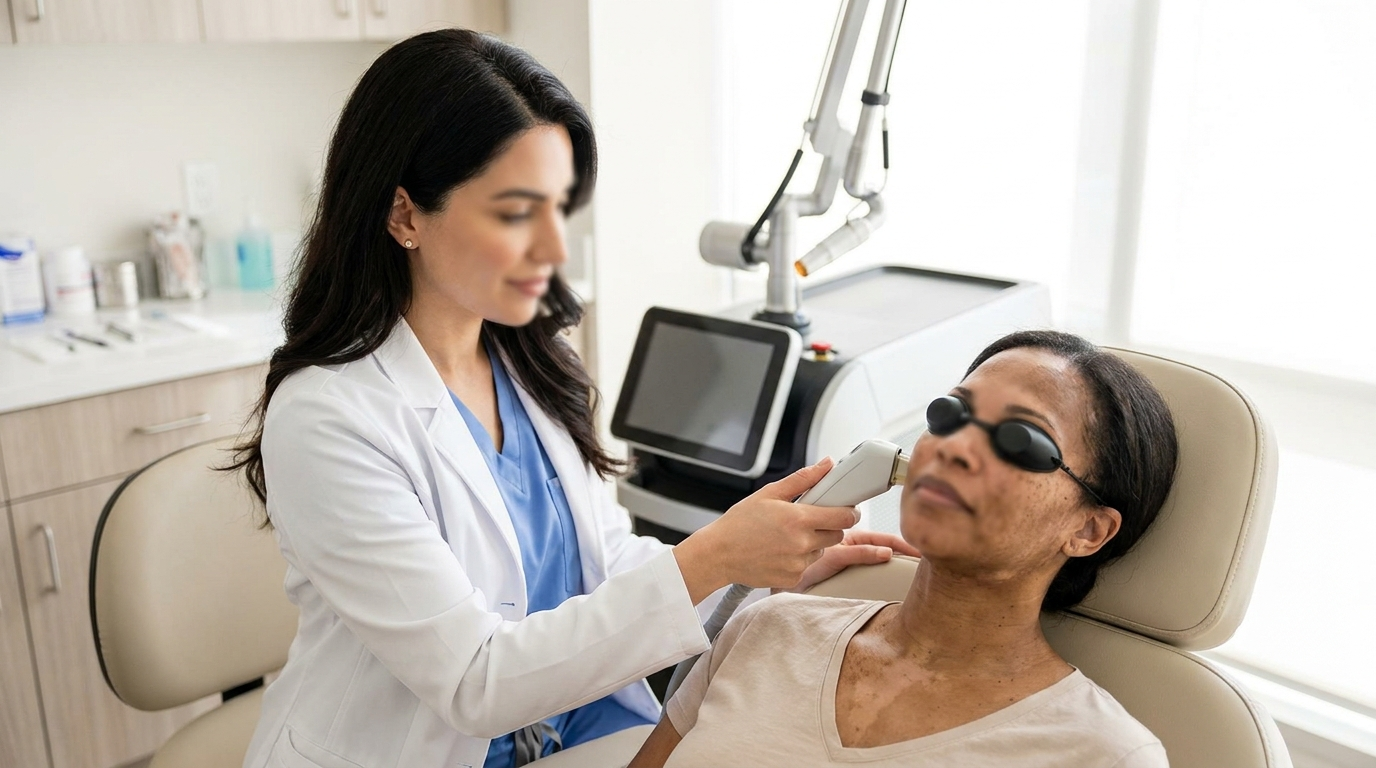
Laser and light-based therapies are among the most effective options for the vascular part of rosacea, meaning the persistent redness and visible vessels. Medscape describes vascular lasers as the mainstay of rosacea therapy for these features. They do not remove the underlying condition, but they can produce clear, lasting improvements in appearance.
IPL (Intense Pulsed Light) uses broad-spectrum light to target oxyhemoglobin in dilated vessels, causing them to collapse and reabsorb. A course of roughly 3 to 5 sessions, spaced several weeks apart, is typical. IPL suits diffuse redness and flushing in lighter skin tones especially well. You can read more about the clinic side of this on our rosacea and redness treatment page.
Pulsed Dye Laser (PDL) and Nd:YAG laser are vascular-specific lasers that target individual vessels with precision. PDL is considered a strong option for visible capillaries, while Nd:YAG is generally safer for darker skin tones and can reach deeper vessels.
Fractional laser resurfacing can help with phymatous texture changes. Our laser skin resurfacing option requires careful patient selection in rosacea to avoid setting off a flare, so it is not for everyone.
These figures are approximate for 2026 and vary by clinic, technology, and treatment area, so treat them as a planning range rather than a quote. Most rosacea laser treatments are considered cosmetic and are not covered by provincial health insurance in Canada. For a plan tailored to your skin, our laser therapy team assesses which protocol fits before anything is booked, and consultations are available at the Toronto and Yorkville locations.
What Skincare Products Are Safe for People With Rosacea?

Rosacea-prone skin does best with a simple, gentle routine. The wrong products can set off a flare as reliably as a dietary or environmental trigger, so less really is more here.
Ingredients to look for:
- Niacinamide: calms redness and supports the skin barrier
- Azelaic acid in lower over-the-counter strengths: soothing and anti-inflammatory
- Centella asiatica (Cica): comforting and barrier-supporting
- Ceramides: restore and maintain the barrier
- Broad-spectrum SPF 30+ mineral sunscreen with zinc oxide or titanium dioxide: non-irritating daily protection
Ingredients to avoid:
- Denatured alcohol and ethanol
- Fragrance and essential oils
- Menthol, camphor, eucalyptus
- Sodium lauryl sulfate cleansers
- High-strength glycolic or salicylic acid
- Witch hazel
A practical routine looks like a fragrance-free cleanser with lukewarm water, any prescribed topical, a ceramide moisturizer, and mineral SPF 30+ every morning. Many people over-cleanse or over-exfoliate to fight the bumps, which tends to make things worse. If you want help choosing products, our guide to the best moisturizer for rosacea is a good place to start, and professional skincare services can pair an at-home routine with clinically appropriate products.
What Lifestyle Changes Can Help Reduce Rosacea Flare-Ups?
Lifestyle changes are not a replacement for medical treatment, but they are a meaningful part of managing rosacea, and some people with milder cases improve through trigger control alone.
Sun protection is the single most useful habit. Daily mineral sunscreen, wide-brimmed hats, and avoiding peak sun hours between 11 a.m. and 3 p.m. reduce the trigger people report most.
Dietary adjustments worth trying include cutting back on alcohol, especially red wine, and limiting spicy foods and hot drinks. Some people find that high-histamine foods like aged cheeses and fermented items worsen flushing, though this varies a lot.
Temperature management helps as well: lukewarm showers instead of hot, skipping saunas and steam rooms, and using a fan during exercise to shed heat.
Stress management matters because emotional stress is one of the most consistently reported triggers. Regular moderate exercise with cooling strategies, better sleep, and calming practices all tend to reduce flare frequency. Vigorous workouts can themselves trigger flushing, so cooler, lower-intensity sessions are often easier on the skin. Keeping a simple trigger journal ties all of this together by revealing your own patterns, which differ from the next person’s.
Are There Natural or Home Remedies That Actually Help Rosacea?
Some home approaches have reasonable support, and others are popular but risky for reactive skin, so it helps to be specific rather than offer a generic list.
What may help:
- Green tea extract: has anti-inflammatory and antioxidant properties, and small studies suggest topical formulas may reduce redness and bumps
- Aloe vera: soothing and hydrating, generally well tolerated when pure and fragrance-free
- Colloidal oatmeal: barrier-supportive and calming, and a recognized skin protectant
- Cold compresses: useful during active flushing to ease vessel dilation
What to avoid despite the hype:
- Apple cider vinegar: highly acidic and often reported to worsen symptoms
- Coconut oil: can clog pores and irritate some rosacea-prone skin
- Tea tree oil: antimicrobial but frequently too harsh for sensitized skin
- DIY scrubs: physical exfoliation can aggravate inflammation
The honest takeaway is that natural remedies can support a plan but rarely replace prescription or clinical treatment for moderate to severe rosacea. They work best as gentle add-ons.
Can People With Sensitive Skin or Darker Skin Tones Get Rosacea?
Rosacea occurs across all skin tones, though it is diagnosed most often in people with fair skin and northern or eastern European ancestry. Part of that is a real prevalence difference, and part is a diagnostic gap, because rosacea can be harder to spot on deeper skin tones and gets underdiagnosed as a result.
On Fitzpatrick types IV through VI, rosacea may show up as a brownish or dusky discoloration rather than bright red, with more prominent bumps and a higher risk of post-inflammatory hyperpigmentation after treatment. For darker skin tones, laser selection matters a great deal: IPL carries a higher pigment-change risk and needs careful calibration or may not be suitable, while Nd:YAG and certain low-fluence settings are generally safer. This is one of the clearest reasons to see an experienced clinician before any energy-based treatment. Consultations tailored to individual skin tones are available at the Mississauga and Oakville locations.
How Much Do Rosacea Treatments Typically Cost?
Costs vary widely depending on whether the approach is pharmaceutical, clinical, or a mix of both. Here is a practical breakdown for 2026, with the usual caveat that prices differ by provider and plan.
Prescription medications may be partly covered by provincial drug plans or private insurance, while laser and light-based treatments are almost always considered cosmetic and are not covered. Most people need maintenance laser sessions every 6 to 12 months after an initial course. A well-managed plan that combines topicals with periodic laser maintenance often runs in the range of $1,500 to $4,000 CAD per year, though that swings with severity and how often you treat.
Recommended Rosacea Treatment Approach by Severity
There is no universal protocol, but severity gives a useful starting framework. Your clinician will tailor it to your subtype, skin tone, and triggers.
For people across Ontario, Canada MedLaser offers rosacea consultations and evidence-based protocols at locations including Ottawa, Vaughan, and Thornhill, alongside the broader menu of laser skin treatments.
Expert Insights: What Clinicians Look For in a Rosacea Assessment
A thorough assessment goes well beyond spotting the obvious redness. Experienced clinicians weigh several things before recommending any protocol: skin tone and Fitzpatrick type, which decide what lasers are safe; the dominant subtype, which steers the choice between topical, oral, and energy-based options; the trigger profile, which predicts how well results will hold; barrier function, which shapes product recommendations; and the history of previous treatments, which prevents repeating what has already failed.
The consultation itself is both diagnostic and therapeutic. When a clinic rushes it, outcomes tend to be less consistent, because rosacea rewards a plan built around the individual rather than a template.
Radiofrequency microneedling devices such as Morpheus8 can be appropriate in select rosacea cases, usually for texture concerns, but only with settings adjusted by an experienced clinician, since the inflammatory risk is real. This is the kind of judgment call a proper assessment exists to make.
What Is New in Rosacea Treatment in 2026?
Rosacea care keeps improving in a few useful ways. Microbiome-targeted therapies are gaining interest, with early-stage trials of probiotic-based topicals, though these are not mainstream yet. Laser protocols for diverse skin tones have improved, as newer Nd:YAG and long-pulse systems with real-time cooling have made vascular treatment safer across a wider range of Fitzpatrick types. Researchers are also exploring whether biologics used for related inflammatory conditions might help severe rosacea, which remains investigational. And digital trigger-tracking tools have grown more capable, letting people log symptoms and responses in a structured way clinicians can review. The overall direction is toward individualized, combination-based care that treats the vascular and inflammatory sides together rather than one after the other.
Frequently Asked Questions About Rosacea
What clears up rosacea fast?
There is no instant fix, but the quickest visible change usually comes from a topical redness reducer like brimonidine or oxymetazoline, which can calm redness within about 30 minutes for several hours. For a flare, cool compresses and removing the trigger help in the short term, while topicals and laser work over weeks.
What is the most successful treatment for rosacea?
There is no single winner, because success depends on your subtype. For bumps, topical ivermectin, azelaic acid, or metronidazole plus low-dose doxycycline tend to work well. For redness and visible vessels, vascular laser and IPL are the mainstay. Most people do best with a combination.
What should you not put on rosacea skin?
Avoid alcohol-based products, fragrance and essential oils, menthol, camphor, witch hazel, harsh physical scrubs, and high-strength glycolic or salicylic acid. Benzoyl peroxide often worsens rosacea even though it helps regular acne.
What are the main causes of rosacea?
The exact cause is not fully known. Evidence points to a mix of genetics, an overactive immune response, blood-vessel changes, and Demodex mites, with environmental triggers making symptoms flare.
Is rosacea contagious?
No. Rosacea cannot be passed through skin contact, shared items, or any other route. It is a chronic inflammatory condition with genetic and immune components.
Can rosacea go away on its own?
It rarely resolves without treatment and tends to progress over time if left alone. The Canadian Dermatology Association notes that untreated rosacea can worsen, so early treatment gives better long-term results.
Does diet cause rosacea?
Diet does not cause rosacea, but certain foods and drinks are well-established triggers. Alcohol, especially red wine, spicy foods, and hot beverages are the ones people report most.
Can I wear makeup if I have rosacea?
Yes, with the right products. Mineral, fragrance-free foundations and concealers are usually well tolerated, and a green-tinted colour corrector can neutralize redness. Skip heavy formulas that need vigorous rubbing to blend.
Is rosacea related to lupus?
They are separate conditions, but lupus can cause a butterfly-shaped facial rash that resembles rosacea. A clinician can tell them apart through examination and, if needed, blood tests. Having rosacea does not raise your lupus risk.
How long does it take for rosacea treatments to work?
Topicals usually show early improvement within 4 to 8 weeks and full benefit around 12 weeks. Low-dose doxycycline may reduce bumps within 3 to 4 weeks. Laser results build gradually, with the best outcome visible 4 to 6 weeks after the final session in a course.
Can rosacea affect areas other than the face?
It mainly affects the central face, but it can sometimes involve the neck, chest, scalp, or ears, and the ocular subtype affects the eyes. These presentations are less common but not rare.
Is there a link between rosacea and gut health?
Some research suggests an association with conditions like SIBO and Helicobacter pylori infection. The relationship is not fully established, and treating a gut condition does not reliably clear rosacea, but it is an active area of study.
Can stress alone trigger a rosacea flare?
Yes. Emotional stress is one of the most consistently reported triggers, likely through stress-related signals that promote vessel dilation and inflammation in predisposed skin.
Does rosacea get worse with age?
It can progress over time if unmanaged, and some subtypes like phymatous rosacea develop slowly over years. Consistent treatment and trigger control are what keep it from advancing.
Is IPL or laser painful for rosacea?
Most people describe IPL and vascular laser as a warm snapping sensation rather than sharp pain, and it is generally well tolerated. Comfort varies by person and area, and a clinician can adjust settings and use cooling to help.
Is Morpheus8 safe for rosacea patients?
It can be appropriate in certain cases, mostly for texture, but it needs an experienced clinician who can adjust settings to limit inflammatory risk. A thorough consultation should come first.
Can rosacea be cured permanently?
No. There is no known cure, so treatment focuses on long-term control. Many people reach a point where symptoms are barely noticeable, but maintenance is what keeps them there.
Conclusion: Next Steps for Managing Rosacea
Rosacea is manageable. That is the most important thing to take from this guide. It asks for a consistent, informed approach rather than a single fix, and the payoff for good management is real for daily comfort and confidence. Here is a sensible order of operations: get a confirmed diagnosis first, start a short trigger journal, strip your routine back to cleanser, moisturizer, and mineral SPF, discuss prescription topicals with a clinician, consider a laser consultation if redness and vessels are your main concern, and commit to maintenance, because this is a chronic condition rather than a one-time repair.
If you would like a plan built around your skin, you can book a skin concerns consultation or learn more on the rosacea and redness treatment page. For deeper reading, our guides on rosacea triggers and the best moisturizer for rosacea pair well with this one.
Related Reading
- Rosacea Triggers to Avoid: Diet, Skincare and Lifestyle Guide
- Best Moisturizer for Rosacea in Canada
- Acne and Rosacea: Know the Difference
- Adult Acne: Why You Break Out After 25
- Hyperpigmentation vs Melasma
For an authoritative overview of rosacea from a Canadian medical body, see the Canadian Dermatology Association rosacea page.
Medical disclaimer: This article is for general education and is not medical advice. Rosacea varies from person to person, and prescription decisions, laser suitability, and treatment plans should be made by a qualified physician or clinician after an in-person assessment. No treatment is guaranteed, universally safe, or a permanent cure. If you have concerns about your skin or a medication, speak with your physician.
Trust our skin and laser guides? Add Canada MedLaser as a preferred source on Google.