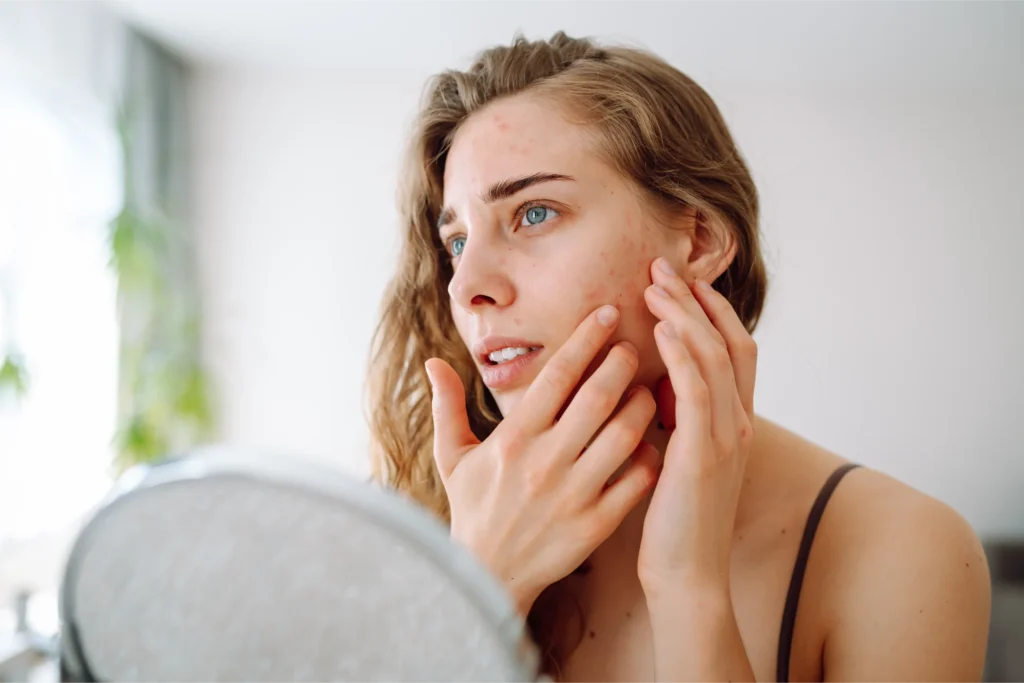
Rosacea affects over three million Canadians, and if you have it, you already know how frustrating the skin care aisle can be. You pick up something that looks gentle, try it for a week, and suddenly your face is angrier than before. Finding the right moisturizer matters more than most people realize because moisturizing is not just about hydration — it is the foundation of managing a damaged skin barrier, which is exactly what drives rosacea flare-ups.
This guide covers everything you need to know: what rosacea actually is, the four subtypes, what ingredients to look for and avoid, the top dermatologist-recommended moisturizers available in Canada, how to build a full rosacea-safe routine, and when a moisturizer alone is not enough anymore. Whether you are searching for the best moisturizer for rosacea in Canada or looking for a full rosacea treatment plan near you in Toronto, Mississauga, Vaughan, Newmarket, or anywhere across the GTA, this is the resource you have been looking for.
What Is Rosacea? Understanding the Condition Before You Shop
Before you spend another dollar on a cream that may or may not work, it helps to understand what you are actually dealing with. Rosacea is a chronic inflammatory skin condition, and the Canadian Dermatology Association estimates it affects over three million Canadians. It is not a temporary flush or a reaction to a bad product — it is a long-term condition that requires consistent management.
The central face is typically the most affected area: the cheeks, nose, chin, and forehead. Rosacea usually develops in adults between the ages of 30 and 50. While it shows up more visibly in people with fair skin, anyone can develop it regardless of skin tone. The first sign is often intermittent redness or blushing that people mistake for sensitive skin. Over time, the redness becomes persistent, and small visible blood vessels begin to appear.
What makes rosacea hard to manage is that it does not respond the way normal sensitive skin does. Standard over-the-counter acne treatments can actually make it significantly worse. The skin barrier in people with rosacea is compromised, which means moisture escapes faster than it should, the skin reacts to things it would normally tolerate, and inflammation cycles in and out without much warning.
The 4 Subtypes of Rosacea
One of the most important things dermatologists want patients to understand is that rosacea is not one condition — it is four. Knowing your subtype changes which moisturizer you should use, what ingredients to prioritize, and what clinical treatments make sense.
Subtype 1 — Erythematotelangiectatic Rosacea (ETR) This is the most common form people picture when they think of rosacea. It causes persistent facial redness, visible blood vessels, and skin that stings, burns, or swells more easily. The redness tends to flare and subside, but without treatment, it becomes more constant over time. People with ETR often have fine-textured skin that is easily dehydrated and extremely reactive to environmental changes.
Subtype 2 — Papulopustular Rosacea Sometimes called adult acne, this subtype produces red bumps and pus-filled pimples on the face. Unlike true acne, there are no blackheads or whiteheads — and that distinction matters when choosing a moisturizer, because anti-acne ingredients like salicylic acid and benzoyl peroxide will make things considerably worse. People with subtype 2 rosacea often have oily or combination skin but still need moisturization because the skin barrier is just as compromised.
Subtype 3 — Phymatous Rosacea This is a rarer form where the skin thickens and becomes bumpy in texture, most often on the nose (called rhinophyma). It predominantly affects men. The skin here tends to be oily and enlarged in pore appearance. Managing it often requires prescription treatment or laser intervention alongside a gentle skincare routine.
Subtype 4 — Ocular Rosacea Rosacea can also affect the eyes, causing symptoms like persistent dryness, redness, a foreign-body sensation, and sensitivity to light. If your eyes feel chronically irritated alongside facial redness, this may be what is happening. Ocular rosacea requires separate medical management, but the skin care around the eyes still benefits from fragrance-free, rosacea-safe products.
Most people have overlapping features from more than one subtype, which is why a professional assessment matters before you commit to a full product lineup.
Why Moisturizer Is Non-Negotiable for Rosacea Skin
A lot of people with oily or combination rosacea skin skip moisturizer, thinking it will make breakouts worse or add to the greasiness. This is one of the most common mistakes, and dermatologists address it constantly.
The skin barrier in rosacea-prone skin is structurally weakened. The top layer of the skin (the stratum corneum) has fewer ceramides than healthy skin, which means it cannot hold onto moisture efficiently. When the barrier is compromised, environmental triggers — wind, temperature changes, certain foods, even stress — get through more easily and set off the inflammatory cascade that causes flare-ups.
Moisturizing consistently helps rebuild and reinforce that barrier. When your skin is properly hydrated, it is less reactive. It does not mean rosacea goes away, but it does mean you spend less time managing emergencies and more time maintaining a steady baseline.
For people with dry rosacea skin, skipping moisturizer almost always worsens both the dryness and the redness simultaneously. For people with oily rosacea skin, a lightweight gel-cream or water-based formula provides enough barrier support without overloading sebum production.
What to Look for in a Rosacea Moisturizer
The ingredient list on a moisturizer tells you more than the marketing on the front ever will. Here is what dermatologists actually look for when recommending moisturizers for rosacea-prone skin in Canada.
Ceramides
Ceramides are lipids (fats) that exist naturally in the skin barrier. They are the glue that holds skin cells together and prevents moisture loss. In rosacea-prone skin, ceramide levels are lower than they should be, which is why products that actively replenish them are among the most useful tools in a rosacea routine. Look for ceramide NP, ceramide AP, and ceramide EOP on ingredient lists — these are the three most common and well-studied forms.
Niacinamide (Vitamin B3)
Niacinamide is one of the most well-researched ingredients for rosacea. It has confirmed anti-inflammatory properties, helps reduce visible redness, strengthens the skin barrier over time, and regulates sebum production — which makes it useful for both dry and oily rosacea skin. Most well-tolerated at concentrations between 2% and 5%. Higher concentrations can occasionally cause flushing in sensitive individuals, so starting lower is wise if you are new to it.
Hyaluronic Acid
This is the workhorse hydrator that draws moisture into the skin from the environment without clogging pores or triggering irritation. It is exceptionally well-tolerated, and you will find it in almost every dermatologist-recommended formula. What matters is the molecular weight — low-molecular-weight hyaluronic acid penetrates deeper; high-molecular-weight sits on the surface and creates a protective film. The best products include both.
Centella Asiatica (Cica)
Centella asiatica has become one of the most popular botanical ingredients in rosacea-friendly skin care for good reason. It contains active compounds — including madecassoside and asiaticoside — that have clinically demonstrated anti-inflammatory and wound-healing effects. Products labelled as “cica” formulas tend to be among the most calming options available.
Glycerin
Glycerin is a humectant that draws water into the skin. It is one of the most universally well-tolerated ingredients across all skin types and skin conditions, including rosacea. It provides immediate comfort without any known irritation risk, which is why it appears in virtually every dermatologist-recommended rosacea formula.
Azelaic Acid
At lower concentrations (5–10%), azelaic acid functions as both an anti-inflammatory and a redness-reducing ingredient. At higher concentrations (15–20%), it is prescription-strength and used to treat the bumps and pustules of papulopustular rosacea. Some moisturizers include it at lower concentrations, which is worth noting if you are dealing with subtype 2 symptoms alongside your hydration needs.
Feverfew and Licorice Root Extract
Both are plant-derived anti-inflammatory agents that have shown efficacy in reducing rosacea-related redness. Feverfew, used in products by Aveeno, has been studied specifically for rosacea. Licorice root (also seen as glycyrrhiza extract or licochalcone) is found in several Eucerin and La Roche-Posay formulas.
Colloidal Oatmeal
Oatmeal has been used for centuries to soothe irritated skin, and the colloidal form (finely milled so it suspends in water) is one of the few naturally-derived ingredients with strong clinical backing for sensitive and reactive skin. It has anti-inflammatory and skin-barrier-supporting properties and is accepted by both the National Eczema Association and the National Rosacea Society.
Ingredients to Avoid
Knowing what to leave on the shelf is just as important as knowing what to look for.
Synthetic fragrance — This is the single most common irritant in skin care for rosacea. Fragrance is a blanket term that can include dozens of individual chemicals, many of which are known triggers for flushing and inflammation. Always choose fragrance-free, not just “unscented” (which may contain masking fragrance).
Alcohol (SD alcohol, denatured alcohol, alcohol denat.) — Drying and barrier-stripping, especially problematic for already-compromised rosacea skin. Fatty alcohols like cetyl alcohol and stearyl alcohol are different and generally fine.
Menthol and eucalyptus — These create a cooling sensation but are vasodilators, meaning they trigger blood vessel dilation — exactly what rosacea-prone skin does not need. Even in small amounts, they can set off a flare.
Essential oils — Lavender, peppermint, tea tree, and rose oil may sound natural and gentle, but many are potent irritants for rosacea skin. Natural does not mean safe for this particular condition.
Witch hazel — A common ingredient in toners marketed as soothing, but it contains tannins and alcohol that are too harsh for rosacea.
High-concentration retinol — Retinol is beneficial for anti-aging, but at higher concentrations it can cause significant flushing and irritation in rosacea-prone skin. If you want the benefits of retinol, work with a skin care professional to introduce it slowly and at a low concentration, paired with a strong barrier-supporting moisturizer.
Benzoyl peroxide and salicylic acid — Standard acne treatments that are almost always too harsh for rosacea skin, even the papulopustular subtype. They can strip the barrier and worsen redness significantly.
The Best Moisturizers for Rosacea in Canada (2026)
These are the products dermatologists and clinical aestheticians most frequently recommend to their rosacea patients in Canada. Some are drugstore finds you can pick up at Shoppers Drug Mart or Rexall; others are clinical-grade formulas available at medical spas and skin care clinics.
1. CeraVe Moisturizing Cream
This is probably the most frequently mentioned moisturizer in dermatologist offices across Canada, and for good reason. It contains three essential ceramides (ceramide NP, AP, and EOP), hyaluronic acid, and glycerin, all in a fragrance-free formula developed in collaboration with dermatologists. The MVE (MultiVesicular Emulsion) technology releases ingredients gradually throughout the day, which helps maintain barrier function consistently rather than in a single burst after application.
CeraVe for rosacea works particularly well for dry to normal rosacea skin. People who find it too heavy can use the CeraVe Moisturizing Lotion instead, which has the same core ingredient profile in a lighter texture.
Best for: Dry to normal rosacea skin, daily barrier repair, year-round use in Canadian climates.
2. La Roche-Posay Toleriane Double Repair Face Moisturizer
La Roche-Posay has built its entire brand around sensitive and reactive skin, and the Toleriane Double Repair is one of their most recommended formulas for rosacea. It contains ceramides, niacinamide, and glycerin, and has been clinically tested on sensitive and rosacea-prone skin. The prebiotic formula also supports the skin’s natural microbiome, which emerging research links to rosacea severity.
If you are dealing with both rosacea and early signs of aging, this is one of the better options for layering with SPF in a morning routine. For people with oily rosacea skin, the La Roche-Posay Toleriane Sensitive Fluide (referenced in multiple dermatology forums and GSC search data) is the lighter, gel-based alternative from the same line.
Best for: Rosacea and sensitive skin, combination to normal skin types, anti-aging alongside barrier support.
3. Vanicream Daily Facial Moisturizer
Vanicream is the choice dermatologists reach for when a patient is reacting to everything else. It is formulated without fragrance, parabens, sulfates, formaldehyde, dyes, and lanolin — all common irritants in skin care. The formula uses hyaluronic acid and ceramides for hydration and barrier support without introducing any unnecessary chemistry. For people with extremely reactive rosacea skin who have had bad experiences with seemingly gentle products, Vanicream is often the reset.
Best for: Highly reactive or sensitized rosacea skin, people patch-testing after a flare, those with multiple product sensitivities.
4. Aveeno Calm + Restore Triple Oat Serum and Redness Relief Moisturizer
Aveeno has done specific research on the use of feverfew and colloidal oatmeal for rosacea. The Calm + Restore line, and specifically the Redness Relief product referenced in GSC data, is designed around exactly these ingredients. Colloidal oatmeal has formal acceptance from the National Rosacea Society, and feverfew has been studied in clinical settings for reducing rosacea-related redness. These products are widely available at Canadian drugstores and are priced accessibly.
The Calm + Restore Redness Relief formula also includes prebiotic oat for microbiome support, which is becoming more relevant as research connecting skin microbiome disruption to rosacea severity grows.
Best for: Budget-conscious rosacea management, oat-sensitive note (test first), mild to moderate ETR subtype 1 rosacea.
5. Cetaphil Redness Relieving Night Moisturizer
Cetaphil is a Canadian staple and one of the most dermatologist-recommended pharmacy brands in the country. The Redness Relieving Night Moisturizer contains licochalcone (licorice root extract) alongside allantoin and caffeine — ingredients that work on visible redness while you sleep. Caffeine helps constrict dilated blood vessels, which reduces the appearance of redness over time with consistent use. This one comes up specifically in GSC data under “best night cream for rosacea” and “rosacea night cream” — an intent cluster that shows people are looking for targeted overnight relief.
Best for: Evening routine, visible redness reduction overnight, combination skin types.
6. Pharmaceris Rosacea Day Cream
This is a less commonly known but well-regarded option that appears directly in the GSC keyword data for Canadian searches. Pharmaceris is a Polish pharmaceutical brand with a strong European dermatology following, and their rosacea-specific day cream contains Vascular Protection Factor technology alongside allantoin and panthenol. It is a dedicated rosacea formulation rather than a general sensitive skin product, which means the entire formula is oriented around reducing vascular reactivity.
Available at select Canadian pharmacies and online. Worth sourcing if you have not responded well to the more mainstream options.
Best for: Vascular subtype rosacea (ETR), people who have tried the common drugstore options without satisfactory results.
7. SkinCeuticals Redness Neutralizer
Available at medical aesthetics clinics including Canada MedLaser, this is a clinical-grade formula developed for inflammatory skin conditions including rosacea. It contains biomimetic peptides, natural anti-inflammatory actives, and a formulation architecture designed to work alongside prescription rosacea treatments without interfering with them. SkinCeuticals products are only sold through authorized medical channels, which means you get a level of formulation integrity and professional guidance that over-the-counter products cannot provide.
If you are already receiving laser rosacea treatment or using prescription topicals like metronidazole (MetroGel) or azelaic acid, a clinical-grade moisturizer like this one is a meaningful complement to your regimen.
Best for: Patients under clinical care, pairing with prescription or laser rosacea treatments, moderate to severe redness with compromised barrier.
8. AlumierMD Recovery Balm
Another clinic-exclusive product available through Canada MedLaser clinics across the GTA. The AlumierMD Recovery Balm is formulated specifically for post-treatment and sensitized skin — it contains shea butter, panthenol, and peptides in a rich but non-comedogenic base. It is particularly useful after laser treatments, microneedling sessions, or chemical peels, when the skin barrier needs intensive short-term support before transitioning back to a lighter daily moisturizer.
Best for: Post-treatment recovery (laser, microneedling, chemical peels), severe barrier disruption, flare-up emergency use.
9. Eucerin Redness Relief Night Cream
This one comes up frequently in Canadian searches for “best night cream for rosacea and wrinkles,” and it deserves its spot. The formula centers on licochalcone A, a licorice root-derived compound with confirmed anti-inflammatory properties for rosacea. Combined with a rich, nourishing base, it works well for people with dry or mature rosacea skin who want overnight barrier support alongside redness relief.
Best for: Dry, mature rosacea skin, overnight redness reduction, best moisturizer for rosacea and aging skin.
10. Zensa Healing Cream
Zensa Healing Cream is not marketed primarily as a rosacea product, but it is one of the most consistently recommended by clinical aestheticians at Canada MedLaser after skin treatments. Its key active ingredient is zinc oxide, which has established anti-inflammatory and barrier-protective properties. It is fragrance-free, paraben-free, and gentle enough for post-procedure skin. Many clients with rosacea use it as a rescue product during flare-ups or as a post-treatment calming layer before their regular moisturizer.
Best for: Post-laser or microneedling care, rosacea flare management, sensitive skin barrier emergency repair.
Choosing the Right Moisturizer for Your Rosacea Skin Type
Rosacea does not always come with dry skin. Here is a quick breakdown by skin type so you can narrow down the right formula for your specific situation.
Best Moisturizer for Dry Rosacea Skin
Dry rosacea skin is the most straightforward to treat with a moisturizer because the need for hydration and the need for barrier support align. Look for cream-format moisturizers with ceramides, glycerin, and niacinamide. CeraVe Moisturizing Cream, Eucerin Redness Relief Night Cream, and AlumierMD Recovery Balm are excellent here. Apply morning and night and do not skip in colder Canadian winters — the combination of dry indoor heating and cold outdoor air strips moisture from rosacea skin faster than almost any other climate factor.
Best Moisturizer for Oily Rosacea Skin
This is where people get confused most often. Oily skin still has a compromised barrier when rosacea is involved, so you still need to moisturize — you just need a lighter formula. Gel-creams and water-based moisturizers are the way to go. La Roche-Posay Toleriane Sensitive Fluide, lightweight niacinamide-forward formulas, and the CeraVe Moisturizing Lotion (rather than the cream) are all solid picks. Avoid oils and heavy emollient-rich creams, which can contribute to the follicular congestion that worsens papulopustular rosacea.
Best Moisturizer for Combination Rosacea Skin
Use a medium-weight formula on the drier cheek zones and a lighter texture on the forehead and nose. Alternatively, a formula like the Vanicream Daily Facial Moisturizer or Aveeno Calm + Restore works across the face without overloading oilier zones. Some people find using a slightly richer formula at night (when oiliness is less of a concern) and a lighter one during the day helps balance things out.
Best Moisturizer for Rosacea and Acne-Prone Skin
Papulopustular rosacea alongside acne is one of the more challenging combinations to manage because the treatments for acne often inflame rosacea. The focus here is on non-comedogenic formulas with niacinamide (which helps both conditions), ceramides for barrier repair, and absolutely no salicylic acid, benzoyl peroxide, or physical scrubs. CeraVe Moisturizing Lotion and La Roche-Posay Toleriane Double Repair are both dermatologist favourites for this combination.
Best Moisturizer for Rosacea and Anti-Aging
As skin matures, it naturally produces fewer ceramides and retains less moisture — the same structural challenges that underlie rosacea. This overlap means mature skin with rosacea is dealing with two compounding barrier problems. Look for formulas that include ceramides, peptides, and niacinamide. The SkinFix Barrier+ Triple Lipid Peptide Face Cream has been recommended by dermatologists specifically for this combination. The Eucerin Redness Relief Night Cream also fits well in this category. If you want the anti-aging benefits of retinol, introduce a low-concentration retinol serum (0.025%–0.05%) very slowly and pair it with a rich ceramide-heavy moisturizer to buffer irritation. This is something to do under professional guidance — the team at Canada MedLaser skin care clinics can help you navigate anti-aging and rosacea management together.
Best Moisturizer for Rosacea with SPF
Sun exposure is one of the most consistent and well-documented rosacea triggers, which means SPF is not optional — it is part of your rosacea management plan. When choosing a moisturizer with SPF for rosacea, mineral (physical) sunscreens using zinc oxide or titanium dioxide are significantly better tolerated than chemical sunscreens, which can cause heat and stinging in reactive skin. Look for SPF 30 minimum with broad-spectrum UVA/UVB protection. The Cetaphil Redness Relieving Moisturizer SPF 20 is one option, though for daytime use, a dedicated mineral SPF moisturizer layered over your regular moisturizer often provides better protection.
Building a Complete Rosacea-Safe Skincare Routine
A moisturizer does not work in isolation. The products around it matter. Here is a simple, dermatologist-aligned routine for rosacea-prone skin that you can adapt based on the products you choose.
Morning Routine
Step 1 — Gentle Cleanse Use a fragrance-free, sulfate-free cleanser with lukewarm water. Hot water is a vasodilator and one of the most overlooked rosacea triggers in a daily routine. Physical scrubs and washcloths should be avoided — wash with clean fingers and pat dry with a soft towel.
Step 2 — Optional Targeted Serum If you are using a niacinamide serum or a calming toner (a non-astringent one like a ceramide toner), this is where it goes. Allow it to absorb before the next step. Not everyone needs this step — if your skin is reactive, keeping the routine to fewer products reduces the chance of interaction.
Step 3 — Moisturizer Apply your chosen rosacea-safe moisturizer while skin is still slightly damp for better absorption. Use gentle upward strokes, no rubbing.
Step 4 — Mineral SPF Apply a broad-spectrum mineral sunscreen SPF 30 or higher as the last step before makeup. This is the non-negotiable step for rosacea. Even on overcast days, and especially during Canadian winters with UV reflection off snow, sun exposure can trigger flares.
Evening Routine
Step 1 — Double Cleanse if wearing SPF or makeup If you wore makeup or SPF, a gentle oil cleanser or micellar water first, followed by a gentle foaming or cream cleanser, removes everything without stripping.
Step 2 — Any Prescription Topicals If your doctor has prescribed metronidazole gel, azelaic acid, or Rosiver (ivermectin cream), this is where they go. Follow your prescriber’s instructions exactly.
Step 3 — Night Moisturizer Apply a rosacea-safe night moisturizer. This can be the same product you use in the morning or a richer formula if your skin tends to be drier overnight. The Cetaphil Redness Relieving Night Cream or Eucerin Redness Relief Night Cream works well here.
Rosacea Triggers to Know and Avoid
Even the best moisturizer will not compensate for consistent trigger exposure. Understanding your personal trigger pattern is one of the most effective things you can do to reduce the frequency and severity of flare-ups.
Common rosacea triggers in Canada:
Sun exposure — the most universal trigger and the reason SPF is essential year-round, including in winter.
Hot beverages — coffee and tea are among the most commonly reported triggers. Letting them cool slightly or switching to iced versions can help without eliminating them.
Spicy food — capsaicin causes vasodilation and triggers flushing in many rosacea patients.
Alcohol — red wine is the most commonly reported culprit, but all alcohol can trigger flushing by dilating blood vessels.
Extreme temperatures — Canadian winters and summers both create problems. Cold wind and dry indoor heating in winter; heat and humidity in summer.
Exercise — the increased core temperature and blood flow from vigorous exercise can trigger flushing. Lower-intensity, cooler-environment exercise helps; cooling down with a damp cloth after workouts reduces flare duration.
Stress — emotional stress is one of the most commonly cited rosacea triggers. Chronic stress elevates inflammatory markers that worsen rosacea over time, not just acutely.
Hot showers and baths — the heat factor again. Lukewarm water for all face washing and bathing.
Certain skin care ingredients — as outlined above, fragrance, alcohol, menthol, and harsh acids are trigger ingredients in products.
Keeping a trigger diary for a few weeks — noting what you ate, drank, the temperature, your stress level, and what your skin did — helps you identify the specific triggers most relevant to your skin.
When Moisturizer Is Not Enough: Professional Rosacea Treatment in Canada
A good moisturizer is foundational, but for many people with rosacea — particularly those with persistent visible blood vessels, deep redness that does not respond to topicals, or frequent painful flare-ups — skincare alone reaches a ceiling. This is where professional treatment becomes the most effective path forward.
At Canada MedLaser clinics across Toronto, Mississauga, Vaughan, Newmarket, Maple, Oakville, Etobicoke, Thornhill, Barrie, and the broader GTA, we treat rosacea with advanced clinical modalities that address the underlying vascular changes driving the condition, not just the surface symptoms.
Laser Treatment for Rosacea Near You
Laser treatment is one of the most effective long-term solutions for rosacea. At Canada MedLaser, we use the Candela GentleMax Pro — a medical-grade laser system that targets the pigment in visible veins and redness. The laser energy causes coagulation of the blood in affected vessels, which collapses them and makes them invisible without damaging the surrounding tissue. Results are visible within sessions, and most people require a series of treatments for optimal clearance.
This treatment has minimal downtime, very short session times (often as little as five minutes for targeted areas), and is appropriate for most skin types. It addresses the root cause of the visible redness rather than masking it — something no moisturizer can do. You can learn more about laser skin treatments at Canada MedLaser and what to expect from the process.
Microneedling for Rosacea
Microneedling at Canada MedLaser creates controlled micro-injuries in the skin that stimulate natural collagen production. As the collagen rushes to repair those micro-channels, it also reduces the appearance of redness, improves skin texture, and gradually strengthens the barrier over multiple sessions. It is natural, involves no chemicals, and has essentially no downtime for most people.
Microneedling sessions for rosacea are typically spaced four to six weeks apart, and most clients see meaningful improvement after two to four sessions. It works particularly well for people with subtype 1 (ETR) rosacea who want diffuse redness addressed alongside skin texture improvement.
Chemical Peels for Rosacea
Medical-grade chemical peels at Canada MedLaser are formulated and applied differently from the harsh at-home versions. When done correctly with rosacea-safe acid concentrations, peels can reduce the redness and bumps associated with papulopustular rosacea while improving overall skin renewal. They are not appropriate during an active flare-up but are highly effective as part of an ongoing management plan during stable periods.
Skin Analysis Before Treatment
At Canada MedLaser, every client begins with a complimentary skin analysis using advanced diagnostic technology. This maps your skin type, identifies your specific concerns, and provides the data needed to build a personalized treatment plan — rather than guessing. For rosacea patients, this is particularly valuable because the appropriate treatment varies significantly based on subtype, severity, and skin type.
Medical-Grade Moisturizers Available at Canada MedLaser Clinics
For clients who want to go beyond drugstore options and ensure they are using formulas that are clinically vetted and appropriate for their specific rosacea subtype, Canada MedLaser clinics carry a curated selection of medical-grade moisturizers and skin care products.
SkinCeuticals Redness Neutralizer is available in-clinic and formulated with biomimetic peptides and natural anti-inflammatory ingredients to directly address rosacea-related redness. It pairs well with prescription treatments and laser protocols.
AlumierMD Recovery Balm is ideal for post-treatment recovery — whether after laser, microneedling, or chemical peels — and is available through Canada MedLaser clinics. Its peptide and panthenol-rich formula supports rapid barrier recovery.
Zensa Healing Cream is available in-clinic and often recommended as a calming layer for clients experiencing active irritation or sensitivity after a procedure.
These products are available to both treatment clients and those who simply want guidance on building the best possible at-home rosacea routine. Speaking with one of our certified medical aestheticians gives you access to product recommendations tailored to your skin rather than general population averages.
Building a Rosacea Routine Around Canadian Climate Realities
Canadian weather creates specific challenges for rosacea management that people in more temperate climates do not face to the same degree. Here is how to adapt your routine.
Winter (October through March): Cold outdoor air and dry indoor heating are a double attack on rosacea skin. Indoor air humidity drops significantly in winter, pulling moisture from already-compromised skin. Consider a humidifier in your bedroom, upgrade to a richer ceramide cream, and apply your moisturizer within a minute of stepping out of the shower to seal in moisture before it evaporates. Do not skip SPF — UV bouncing off snow surfaces causes more exposure than many people expect.
Spring and Fall: Temperature fluctuations and wind are the main issues. Layering your routine with a barrier cream on days with high wind exposure protects the skin from one of its most reliable triggers.
Summer: Heat, sweat, and UV exposure collectively make summer one of the most challenging seasons for rosacea. Keep your routine lightweight and prioritize mineral SPF above everything. Reapplying SPF throughout the day is not optional if you are spending time outdoors. Consider misting your face with cool water on hot days rather than using a facial mist product, which may contain fragrance.
Rosacea Treatment Near Me: Locations Across the GTA
If you are searching for rosacea treatment near you in the Toronto area or anywhere across Ontario, Canada MedLaser has over fifteen locations across the Greater Toronto Area, including clinics in:
Toronto (Harbourfront and Yorkville), Mississauga, Vaughan, Maple, Newmarket, Oakville, Etobicoke, Thornhill, and Barrie.
Each clinic offers the same standard of care, the same diagnostic technology, and access to the same treatment modalities. You can find your nearest Canada MedLaser clinic location and book a complimentary consultation to discuss your rosacea management plan — whether that means starting with the right moisturizer protocol, exploring laser treatment, or getting a full skin analysis to understand exactly what your skin needs.
For those outside the GTA searching for rosacea moisturizer or rosacea treatment options in Canada, the product recommendations in this guide are available through Canadian drugstores, pharmacies, and online retailers. The clinical-grade options (SkinCeuticals, AlumierMD) can be sourced through authorized medical aesthetics clinics.
What Dermatologists Say About Rosacea Management in Canada
The Canadian Dermatology Association consistently emphasizes that rosacea does not resolve on its own, and that untreated rosacea worsens over time. The combination of appropriate skincare, trigger management, and clinical treatment when needed is the most evidence-based approach to managing the condition long-term.
A dermatologist- or medical-aesthetician-guided rosacea plan typically includes:
Identifying your rosacea subtype and understanding which features are driving your symptoms.
A gentle skincare routine built around a fragrance-free cleanser, ceramide-based moisturizer, and mineral SPF.
Trigger identification and realistic modification — not elimination of everything enjoyable, but understanding what is genuinely driving your flare frequency.
Prescription topicals where appropriate — metronidazole gel, azelaic acid, or Rosiver (ivermectin cream) for subtype 2 rosacea with papules and pustules.
Laser or light-based treatment for persistent visible blood vessels and chronic redness that does not respond to topicals.
The takeaway from the Canadian Dermatology Association is clear: the earlier you start managed treatment, the better your long-term outcomes. Rosacea that is caught and managed early is far easier to control than rosacea that has been left to worsen for years. Our guide on how to get rid of rosacea permanently explains what that long-term control realistically looks like.
Frequently Asked Questions
What is the best moisturizer for rosacea in Canada in 2026?
For most skin types, CeraVe Moisturizing Cream, La Roche-Posay Toleriane Double Repair, and Vanicream Daily Facial Moisturizer are the top three dermatologist-recommended options available across Canadian drugstores. For clinical-grade options, SkinCeuticals Redness Neutralizer available at Canada MedLaser clinics is one of the most targeted formulas for rosacea.
Can I use any moisturizer for rosacea, or does it need to be a special one?
It does not need to say “rosacea” on the label, but it does need to meet specific criteria: fragrance-free, alcohol-free, ceramide-containing, and without known irritants like menthol or essential oils. Many general “sensitive skin” moisturizers meet these criteria — the key is reading the ingredient list, not the marketing.
How often should I moisturize rosacea-prone skin?
Morning and evening, consistently. Even if your skin feels oily or not particularly dry on a given day. Consistent barrier support is what prevents the reactivity that leads to flares — intermittent moisturizing is less effective than a steady daily habit.
Is rosacea a skin condition I need to see a dermatologist for?
You do not strictly need a dermatologist for mild rosacea managed with appropriate skincare, but if your rosacea involves bumps, pustules, persistent visible blood vessels, or is worsening despite a careful routine, professional assessment makes a meaningful difference. A medical aesthetician at Canada MedLaser can provide a complimentary skin analysis and direct you to the right level of care.
How do I know if my moisturizer is making my rosacea worse?
Patch test any new product on your inner arm or jawline for a few days before applying it to your full face. If you notice increased redness, stinging, burning, or new bumps within 24–72 hours of starting a new moisturizer, discontinue it. When you are reacting to multiple products in a row, the most common culprits are fragrance, alcohol, or a specific preservative — a process of elimination with a stripped-back routine (one cleanser, one plain moisturizer) helps identify the issue.
Is CeraVe good for rosacea?
Yes, CeraVe is one of the most consistently recommended drugstore brands for rosacea in Canada. The Moisturizing Cream and the Moisturizing Lotion are both fragrance-free, ceramide-rich formulas that dermatologists endorse for rosacea-prone skin. The brand was actually developed in collaboration with dermatologists specifically for barrier-impaired skin. However, some people with rosacea do find the preservative used in CeraVe (phenoxyethanol) mildly irritating — if that is you, Vanicream is the next step down.
Is CeraVe Moisturizing Cream good for rosacea?
Yes — this is probably the most frequently mentioned single product in Canadian dermatology discussions about rosacea moisturization. The three-ceramide formula with MVE technology is exactly what rosacea skin needs.
Are ceramides good for rosacea?
Absolutely. Ceramides are not just good — they are arguably the most important ingredient category for rosacea skin. They directly repair the barrier deficiency that makes rosacea skin so reactive. Any rosacea moisturizer that does not contain ceramides is working with one hand tied behind its back.
Is the La Roche-Posay Toleriane Sensitive Fluide good for rosacea?
Yes, particularly for oily or combination rosacea skin. It is lightweight, non-comedogenic, and formulated specifically for sensitive reactive skin. The Toleriane line is one of the most recommended by Canadian dermatologists for reactive and rosacea-prone skin.
Can I use Prosacea Gel for rosacea?
Prosacea is an over-the-counter gel containing sulphur as its active ingredient. It is available at Canadian pharmacies and is sometimes used for subtype 2 rosacea with bumps and pustules. While sulphur has some anti-inflammatory properties, the evidence base is not as strong as for prescription topicals, and some people find the sulphur drying or irritating. It is not a replacement for a proper moisturizer — if you use it, layer your rosacea-safe moisturizer over or around it as directed.
What is the best over-the-counter rosacea treatment in Canada?
Over-the-counter options in Canada are primarily focused on symptom management rather than treatment. A good ceramide-based moisturizer, a mineral SPF, and a gentle cleanser form the best OTC management foundation. For actual rosacea treatment (reducing visible blood vessels, persistent redness, or inflammatory bumps), prescription options like metronidazole, azelaic acid, or ivermectin cream (Rosiver) are significantly more effective, and clinical treatments like IPL and laser are the most durable long-term options.
Trust our skin and laser guides? Add Canada MedLaser as a preferred source on Google.