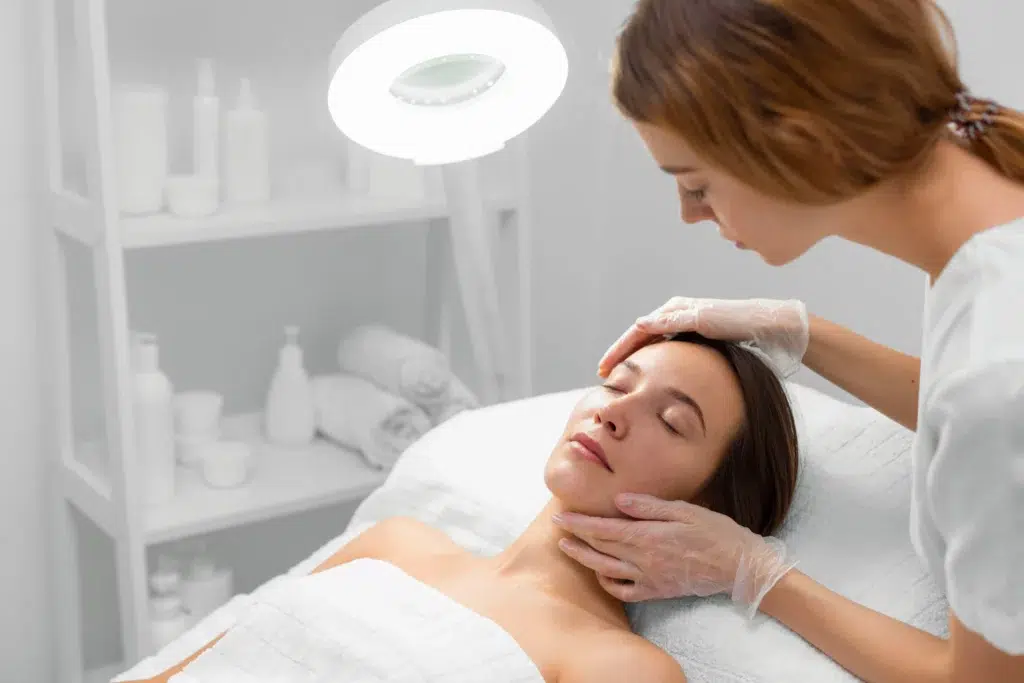
Morpheus8 is a fractional radiofrequency microneedling device. The device delivers controlled thermal energy. Further, it does so through a 24 coated microneedle with the option to choose the depth from 1mm to 8mm. Moreover, collagen remodeling takes place in dermis and subdermal tissue. Treats loose skin, wrinkles, acne scars, enlarged pores, and uneven texture on the face and body, lasting one to 3 years. Typically, downtime takes one to three days, with maximum improvement around three months after treatment.
Key Takeaways
- Morpheus8 combines mechanical microneedling with fractional radiofrequency energy, reaching tissue depths up to 8mm, which traditional microneedling cannot achieve.
- Results develop gradually: subtle changes appear within 2 weeks, visible tightening by 6 weeks, and peak improvement around 3 months post-treatment.
- Longevity is a major advantage: results typically last one to three years, making it a durable non-surgical option.
- Downtime is minimal, generally 1 to 3 days, which is significantly less than ablative laser resurfacing or surgical alternatives.
- All skin tones can be treated because the radiofrequency energy is delivered below the skin’s surface, reducing hyperpigmentation risk compared to laser-based treatments.
- Treatment is highly customizable: practitioners can independently adjust needle depth, radiofrequency burst duration, and coagulation mode for each facial zone.
- Multiple concerns can be addressed in a single session, including laxity, scarring, texture, and pigmentation irregularities.
- It is not a surgical replacement for severe laxity or significant volume loss, but it performs well for mild to moderate concerns and early-stage aging signs.
- A series of sessions (typically two to four) is often recommended for optimal outcomes, depending on individual skin condition and treatment goals.
What Is Morpheus8 and How Does It Work?
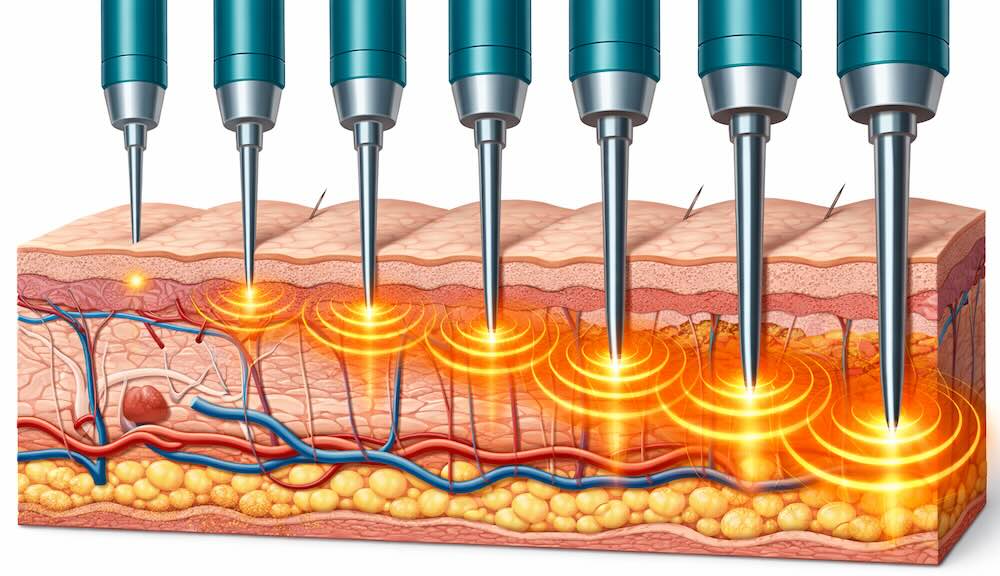
Morpheus8 is a system developed by InMode that provides fractional radiofrequency microneedling designed for the treatment of skin laxity, textural irregularities, and subdermal fat remodeling by delivering energy in a precise manner. It offers results with skin treatments that work from the inside out.
The device consists of an arrangement of 24 coated microneedles that penetrate the skin at a programmed depth of between 1-8mm. When inserted, the needles emit bursts of radiofrequency energy that heat the surrounding tissue and stimulate the body’s natural wound-healing response. This process promotes the production of new collagen and the remodeling of elastin in the area treated.
The thermal component is what sets morpheus8 microneedling apart. Traditional microneedling creates microchannels for repair on the surface level. Furthermore, Morpheus8 adds heat energy, causing immediate collagen contraction (often seen as soon as within days) and sustained rebuilding of collagen that occurs for three to six months.
Key technical parameters practitioners can adjust include:
- Needle penetration depth (1mm to 8mm depending on the treatment zone and concern)
- Radiofrequency burst duration (controls how long energy is delivered per pulse)
- Coagulation mode (bipolar for more superficial precision, unipolar for deeper tissue heating)
This level of customization allows a single device to treat everything from superficial fine lines to deeper structural issues like tethered scar tissue and mild jowling, all within one session.
“Morpheus8’s ability to deliver radiofrequency energy at depths of 4 to 6mm allows treatment of deeper structural issues like tethered tissue and scar architecture, releasing tissue constraints and stimulating collagen formation throughout entire scar structures rather than superficially.”
For those exploring the full range of skin rejuvenation options, understanding how morpheus8 fits into the broader treatment landscape is a useful starting point.
How Effective Is Morpheus8 for Wrinkles, Fine Lines, and Skin Laxity?
Morpheus8 is clinically proven to help with mild to moderate wrinkles, fine lines, and early-stage laxity. Its collagen remodeling properties are comparable to those of ablative laser resurfacing but with much less downtime and a lower risk of post-inflammatory hyperpigmentation.
The therapy acts on two levels at once. Microneedles mechanical action creates controlled micro-injuries that spark a whole repair cascade. With the radiofrequency heat, the already existing collagen fiber shrinks right away and stimulates the formation of new collagen over the subsequent months. Morpheus8 provides visible results on patients who present with early jowling, jawline softening, neck laxity, and periorbital fine lines.
What the research and clinical evidence suggest:
- Subtle changes are noticeable within 2 weeks of treatment
- Visible skin tightening typically appears by 6 weeks
- Maximum improvement occurs around 3 months post-treatment
- Continued neocollagenesis improves firmness for 3 to 6 months after the session
- Results can last one to three years with proper maintenance
Where morpheus8 performs best:
- Early jowls and mild jawline laxity
- Neck skin looseness
- Periorbital (around the eye) fine lines
- Nasolabial folds (mild to moderate)
- Forehead lines and brow area
Where results may be limited:
- Severe skin laxity requiring surgical intervention
- Deep, volume-related facial hollowing (better addressed with fillers)
- Significant excess skin (surgical removal remains the standard of care)
For patients already considering laser skin tightening as an option, morpheus8 is worth comparing directly, since its subdermal reach often produces more durable structural changes than surface-only energy devices.
What Skin Concerns and Body Areas Can Morpheus8 Treat?
Morpheus8 is approved for use on the face, neck, and body, and it effectively addresses a wide range of skin concerns in a single treatment system. Its programmable depth makes it adaptable across different anatomical zones with varying tissue thickness.
Facial concerns morpheus8 addresses effectively:
- Early jowls and jawline definition loss
- Neck laxity and horizontal neck lines
- Fine lines and wrinkles (forehead, periorbital, perioral)
- Acne scars and textural irregularities
- Enlarged pores
- Uneven skin tone and mild pigmentation irregularities
Body areas commonly treated:
- Abdomen (mild laxity, post-pregnancy skin looseness)
- Inner arms and thighs
- Knees
- Décolletage
- Stretch marks (with variable results)
The device’s ability to reach depths of up to 8mm makes it particularly useful for body areas where skin is thicker and requires deeper energy delivery to trigger meaningful tissue remodeling. At these depths, the treatment stimulates a long-term healing and rebuilding response that surface treatments simply cannot replicate.
One important nuance: results on body areas tend to be more modest than facial results, partly because the skin-to-fat ratio differs and the healing response is less robust in some body zones. Patients with realistic expectations about body treatments tend to report higher satisfaction.
Those dealing with acne-prone skin or enlarged pores may find morpheus8 particularly relevant, as the combination of depth and thermal energy addresses both the surface texture and the underlying structural factors that contribute to these concerns.
Is Morpheus8 Safe for All Skin Types and Tones?
Yes, morpheus8 is considered safe for all Fitzpatrick skin types, including darker skin tones, because the radiofrequency energy is delivered beneath the skin’s surface rather than targeting surface pigment directly. This is a meaningful clinical advantage over many laser-based treatments.
Traditional ablative lasers and some fractional laser devices carry a higher risk of post-inflammatory hyperpigmentation (PIH) in patients with Fitzpatrick types IV through VI. Morpheus8 largely sidesteps this issue because the thermal energy is deposited intradermally, not at the epidermal level where melanocytes are concentrated.
Safety profile summary:
| Factor | Morpheus8 | Ablative Laser | Traditional Microneedling |
|---|---|---|---|
| Suitable for dark skin tones | Yes | Limited | Yes |
| Downtime | 1 to 3 days | 7 to 14 days | 1 to 2 days |
| Hyperpigmentation risk | Low | Moderate to high | Low |
| Depth of treatment | Up to 8mm | Surface to mid-dermis | Surface only |
| Collagen remodeling depth | Deep structural | Mid-dermal | Superficial |
Who should avoid or delay morpheus8:
- Active acne breakouts in the treatment area
- Open wounds or active skin infections
- Keloid-prone individuals (proceed with caution and medical consultation)
- Pregnancy
- Patients with certain implanted electronic devices (pacemakers)
- Recent use of isotretinoin (typically a 6-month waiting period is advised)
A qualified practitioner will conduct a thorough skin assessment before proceeding. This is not a treatment to book impulsively, and the consultation process matters considerably for outcome quality.
How Does Morpheus8 Compare to Traditional Microneedling?
Morpheus8 achieves deeper and longer-lasting effects than standard microneedling because it adds radiofrequency thermal energy to the process of creating mechanical punctures. This enables it to tackle structural skin issues that surface microneedling cannot.
The micro-injuries in a standard microneedling are intended to stimulate the skin for repair. Improvement of surface texture, mild scarring, and overall skin quality can be achieved. Nevertheless, it does not create the heat necessary to shrink collagen, remodel fat beneath the skin, and address tightening tissues at depth.
Morpheus8 adds a thermal dimension. The radiofrequency element provides heat to the tissue at predetermined depths causing an immediate contraction of collagen and a prolonged neocollagenesis which lasts for many months. For patients with laxity, deeper scarring, or structural issues, this difference is clinically relevant.
Choose traditional microneedling if:
- The primary concern is surface texture or mild pigmentation
- Budget is a significant constraint (microneedling is generally less expensive)
- The patient prefers a less intensive treatment with minimal sensation
Choose morpheus8 if:
- Skin laxity, jowling, or deeper scars are the primary concern
- Longer-lasting results are a priority
- Multiple concerns (texture, laxity, scarring) need to be addressed simultaneously
- The patient has a darker skin tone and wants to minimize hyperpigmentation risk
Some patients also combine morpheus8 with PRP microneedling protocols or collagen therapy to further amplify the healing and regenerative response. Whether that combination is appropriate depends on the individual’s skin condition and treatment goals.
What Does a Morpheus8 Treatment Session Actually Involve?
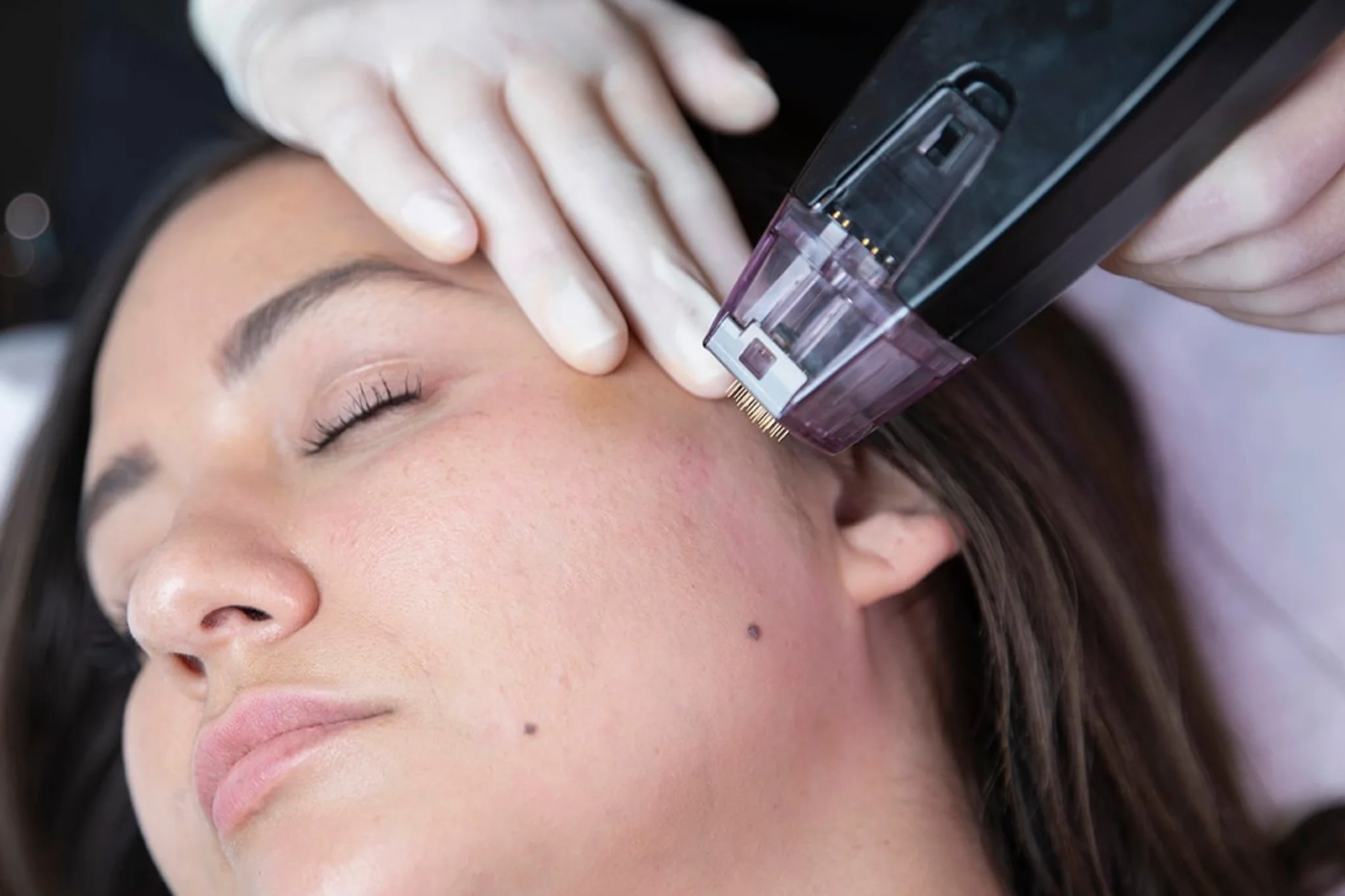
A morpheus8 session typically takes 30 to 60 minutes for facial treatment, with preparation and post-care extending the appointment to approximately 90 minutes. The experience is manageable for most patients, though it is not entirely without sensation.
Step-by-step treatment process:
- Consultation and skin assessment to determine appropriate depth settings, number of passes, and treatment zones
- Topical numbing cream applied 30 to 60 minutes before the procedure to minimize discomfort
- Skin cleansing to remove all products, oils, and debris from the treatment area
- Device calibration by the practitioner, setting needle depth and radiofrequency parameters for each zone
- Treatment passes across the target area, with the device making contact in a systematic grid pattern
- Post-treatment care applied immediately, typically including soothing serums or growth factor products
- Aftercare instructions provided, covering sun avoidance, skincare restrictions, and activity limitations
What to expect after the session:
- Redness and mild swelling are normal and typically resolve within 24 to 72 hours
- Small pinpoint marks from the needle entry points fade within a few days
- Skin may feel warm and tight for 24 to 48 hours
- Makeup can generally be applied after 24 to 48 hours (practitioner-dependent)
- Sun protection is non-negotiable for at least two weeks post-treatment
Most patients return to normal activities within one to three days. This is considerably faster than recovery from ablative laser resurfacing or surgical procedures, which is one of the reasons morpheus8 has gained traction among patients who cannot afford extended downtime.
How Long Do Morpheus8 Results Last, and When Will You See Them?
Morpheus8 results typically last one to three years, with the timeline influenced by age, skin condition, lifestyle factors, and whether maintenance sessions are performed. Results are not immediate, which is something worth understanding before booking a session.
The treatment timeline follows a predictable pattern:
- Within 2 weeks: Subtle improvements in texture and tone become noticeable
- At 6 weeks: Visible skin tightening and improved firmness
- At 3 months: Maximum improvement, as collagen remodeling reaches its peak
- 3 to 6 months post-treatment: Continued neocollagenesis further refines results
- 1 to 3 years: Duration of results before maintenance may be needed
Maximum tissue remodeling occurs at depths up to 8mm, triggering a long-term healing and rebuilding response that accounts for the treatment’s durability. This is notably different from surface treatments whose effects fade much faster because they do not stimulate deep structural change.
Factors that extend or reduce longevity:
- Consistent sun protection significantly preserves collagen gains
- Smoking and excessive alcohol consumption accelerate collagen degradation
- A good skincare routine with retinoids and antioxidants supports results
- Annual or biannual maintenance sessions can extend the benefit window
- Significant weight fluctuations can affect skin laxity outcomes
For patients in the Toronto area exploring their options, the Morpheus8 treatment page provides specific information about protocols and what to expect locally.
Is Morpheus8 a Safe Alternative to Traditional Cosmetic Surgery?
Morpheus8 is a safe and effective non-surgical option for mild to moderate skin laxity and textural concerns, but it is not a direct replacement for surgical procedures in cases of significant excess skin or severe structural aging. The distinction matters for setting realistic expectations.
For patients in the early stages of facial aging, those with mild jowling, neck laxity, or textural concerns, morpheus8 can deliver meaningful improvement without the risks, costs, and recovery associated with surgical intervention. The collagen remodeling effects are genuine and documented, and the treatment profile is well-suited to patients who want visible results without going under the knife.
Morpheus8 is a reasonable surgical alternative when:
- Concerns are mild to moderate (early jowls, mild neck laxity, texture issues)
- The patient wants to delay or avoid surgery
- Recovery time is a constraint
- The patient is not a surgical candidate for medical reasons
Surgery remains the appropriate choice when:
- There is significant excess skin that requires physical removal
- Volume loss is the primary concern (better addressed with fillers or fat grafting)
- Ptosis (drooping) is severe and structural correction is needed
- Previous non-surgical treatments have not produced adequate results
Some patients use morpheus8 as a “bridge” treatment, maintaining their results in the years between surgical procedures, or using it to delay the need for surgery altogether. That is perhaps one of the more practical ways to think about its role in a long-term skin health strategy.
For those considering complementary options, skin resurfacing treatments and laser therapy can sometimes be combined with morpheus8 protocols for a more comprehensive approach, depending on the patient’s specific concerns and skin condition.
What Does Morpheus8 Cost, and Is It Worth the Investment?
Morpheus8 treatment costs vary based on geographic location, the number of areas treated, the practitioner’s experience level, and the number of sessions in the protocol. In Canada and the United States, per-session costs typically range from approximately $800 to $2,500 CAD for facial treatment, with body areas often priced separately.
Most practitioners recommend a series of two to four sessions spaced four to six weeks apart for optimal results, meaning total investment for a full protocol can range from roughly $1,600 to $7,500 or more depending on the scope of treatment.
Is it worth it? For patients with realistic expectations and appropriate candidacy, the answer is generally yes, for a few reasons:
- The longevity of results (one to three years) means the cost-per-month is often competitive with ongoing injectable treatments
- The ability to address multiple concerns simultaneously in a single session reduces the need for multiple separate treatments
- The minimal downtime (1 to 3 days) reduces indirect costs like missed work or social commitments
- The low hyperpigmentation risk for darker skin tones makes it accessible to a broader patient population who may have limited safe alternatives
The investment calculus changes if the patient’s concerns are mild enough to be addressed by less expensive treatments, or severe enough to require surgery. Morpheus8 occupies a specific middle ground, and it performs best when used for the right indications.
For patients across Ontario looking for accessible consultations, Canada MedLaser offers morpheus8 services at multiple locations including Toronto, Mississauga, Scarborough, and Oakville, among others. Readers in York Region can also see our Morpheus8 in Vaughan guide to local cost and results.
FAQ: Morpheus8 Treatment
Q: How many morpheus8 sessions are typically needed?
Most patients benefit from two to four sessions spaced four to six weeks apart. Some patients with mild concerns see satisfactory results after one or two sessions, while those with more significant laxity or scarring may need more.
Q: Does morpheus8 hurt?
Topical numbing cream is applied before treatment, which significantly reduces discomfort. Most patients describe the sensation as a warm, prickling feeling. Discomfort levels vary by treatment zone, with areas closer to bone (like the jawline) tending to feel more intense.
Q: Can morpheus8 be combined with other treatments?
Yes. It is commonly combined with PRP (platelet-rich plasma), botulinum toxin, or dermal fillers. Combining treatments should be planned carefully with a qualified practitioner to avoid overstimulation or conflicting healing timelines.
Q: How soon after morpheus8 can I wear makeup?
Most practitioners advise waiting 24 to 48 hours before applying makeup to allow the micro-channels to close and reduce infection risk. Mineral-based makeup is often preferred for the first few days.
Q: Is morpheus8 permanent?
No. Results are long-lasting (one to three years) but not permanent, because the natural aging process continues. Maintenance sessions can extend results considerably.
Q: Who is the ideal candidate for morpheus8?
Adults in their 30s to 60s with mild to moderate skin laxity, textural concerns, acne scarring, or early jowling tend to see the best results. It is suitable for all skin tones. [3]
Q: What should I avoid before a morpheus8 treatment?
Avoid blood-thinning medications (if medically safe to pause), retinoids for five to seven days prior, active sun exposure, and self-tanning products. Your practitioner will provide a complete pre-treatment checklist.
Q: How long is the recovery after morpheus8?
Most patients experience one to three days of redness, mild swelling, and pinpoint marks. Social downtime is typically two to three days for most people.
Q: Can morpheus8 treat the under-eye area?
Yes, with modified settings and careful technique. The periorbital area requires shallower depth settings and an experienced practitioner. It can address fine lines and mild crepiness around the eyes.
Q: Is morpheus8 effective for acne scars?
Yes. The device’s ability to deliver energy at depths of 4 to 6mm allows it to address the structural architecture of deeper scars, releasing tethered tissue and stimulating collagen formation throughout the scar structure rather than just at the surface.
Conclusion
Morpheus8 occupies a well-defined and genuinely useful position in the non-surgical aesthetics space in 2026. It is not a miracle treatment, and it is not appropriate for everyone, but for patients with mild to moderate laxity, textural concerns, acne scarring, or early-stage facial aging, it delivers clinically meaningful results with a favorable safety profile and manageable downtime.
The combination of programmable needle depth (up to 8mm), customizable radiofrequency parameters, and adaptability across all skin tones makes it one of the more versatile devices currently available. The fact that results can last one to three years and that multiple concerns can be addressed in a single session adds practical value for patients who want efficient, durable outcomes.
Actionable next steps:
- Book a consultation with a qualified practitioner who can assess your specific skin concerns and determine whether morpheus8 is the right fit. You can book a Morpheus8 consultation here.
- Review before-and-after results from real patients to calibrate expectations before committing to a protocol.
- Ask about combination protocols during your consultation, as pairing morpheus8 with complementary treatments may enhance and extend your results.
- Establish a post-treatment skincare routine that includes broad-spectrum SPF, antioxidant serums, and hydration to protect and prolong your collagen investment.
- Plan for a series, not a single session, if your concerns are moderate. One treatment rarely delivers the full result that a properly spaced protocol can achieve.
The decision to pursue morpheus8 should be based on a clear understanding of what it can and cannot do, a realistic treatment timeline, and a practitioner relationship built on honest assessment. When those conditions are met, it is a treatment that consistently delivers on its core promise.
Trust our skin and laser guides? Add Canada MedLaser as a preferred source on Google.