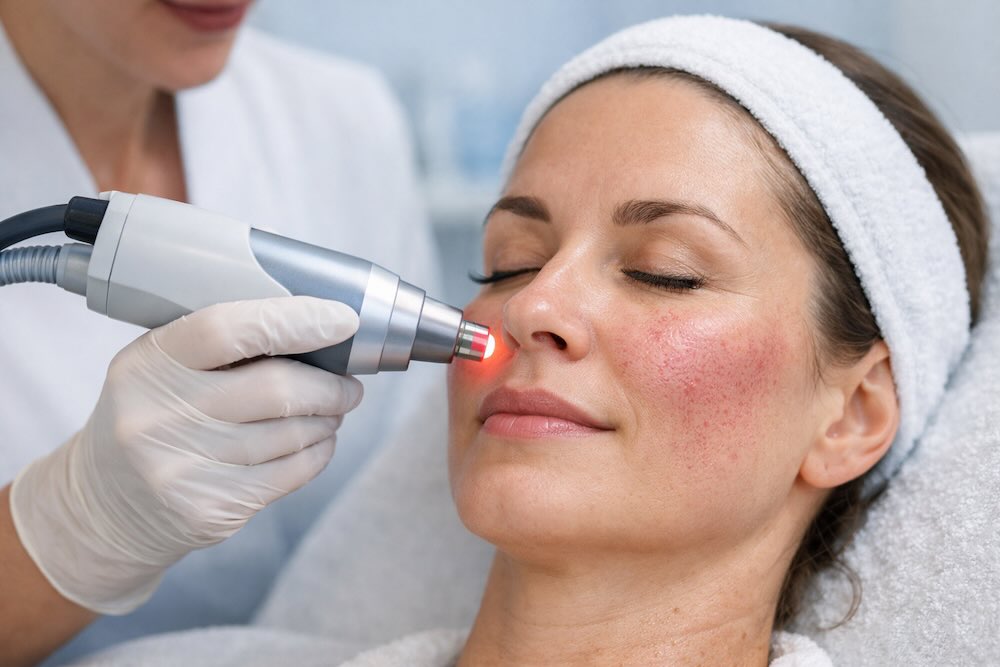
Laser treatment for rosacea is one of the most clinically supported options for reducing persistent facial redness, visible blood vessels, and flushing associated with vascular rosacea. Pulsed dye laser (PDL) and intense pulsed light (IPL) are the most widely used technologies, with most patients requiring a series of sessions to achieve meaningful, lasting improvement. Results are not permanent, but they can significantly reduce symptoms for extended periods when combined with a proper skincare routine and, where appropriate, topical or oral medications.
Key Takeaways
- Laser treatment for rosacea works by targeting hemoglobin in dilated blood vessels, causing them to collapse and be gradually reabsorbed by the body.
- Pulsed dye laser (PDL) remains the most established option for vascular rosacea; IPL is a strong alternative for diffuse redness.
- Newer technologies like the UltraClear cold fiber laser offer precision resurfacing with reduced downtime.
- Rosacea has four recognized subtypes; laser therapy is most effective for erythematotelangiectatic (vascular) and, to a lesser extent, papulopustular types.
- Combining laser with topical treatments (such as ivermectin 1% cream or alpha-agonist creams) produces better outcomes than laser alone.
- Most patients need 3 to 6 sessions spaced several weeks apart, with maintenance treatments recommended annually or as needed.
- Early treatment tends to prevent progression, making timely intervention important.
- Laser is generally safe for Fitzpatrick skin types I through IV; darker skin tones require careful device selection and settings.
- Side effects are usually mild and temporary: redness, swelling, and occasional bruising that fades within days.
- Sunscreen and gentle skincare are non-negotiable before and after treatment.
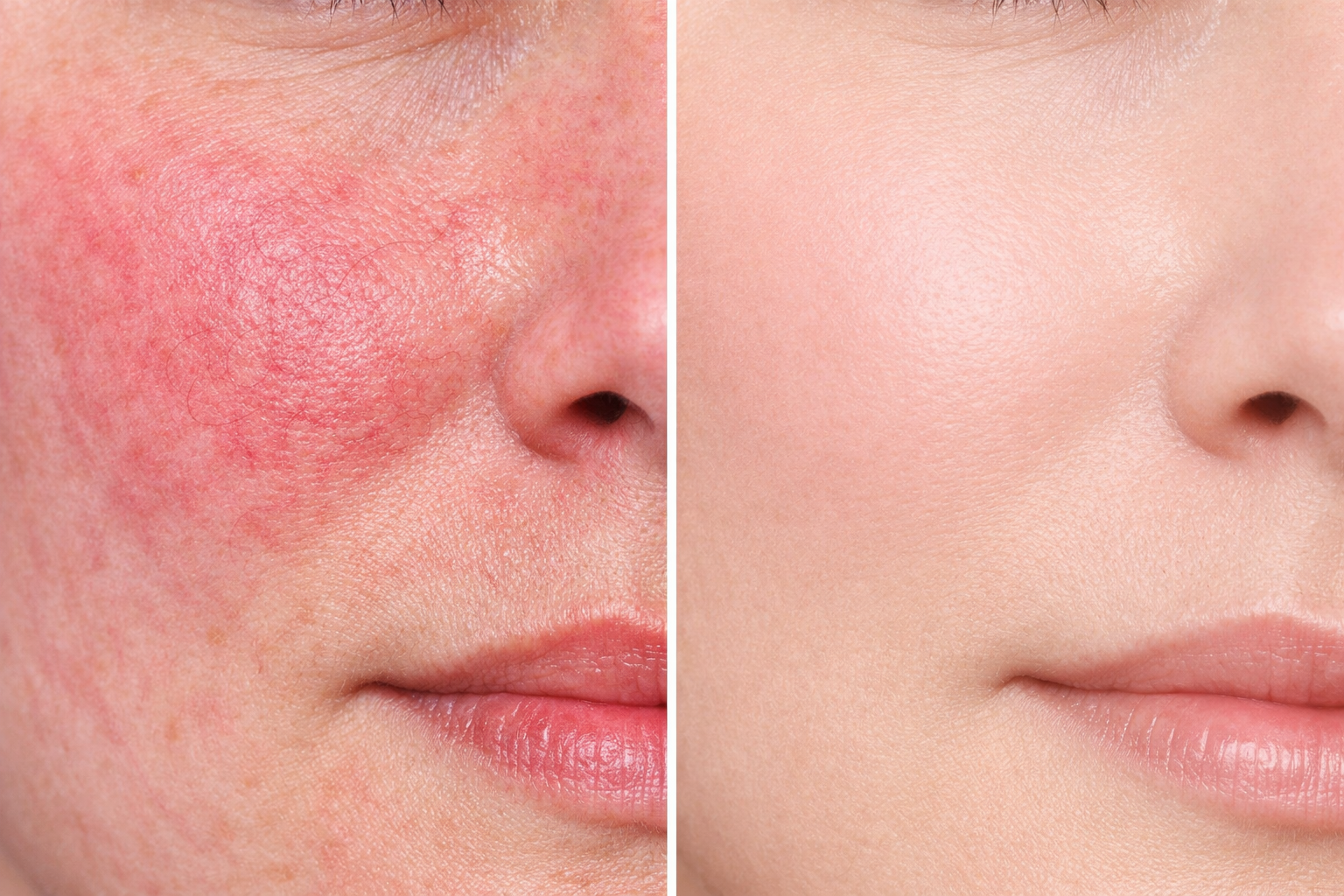
What Is Rosacea and Why Does It Respond to Laser?
Rosacea is a chronic inflammatory skin condition that primarily affects the central face, producing persistent redness, visible capillaries (telangiectasia), flushing episodes, and sometimes papules or pustules. It affects millions of adults worldwide, with fair-skinned individuals of northern European descent being disproportionately affected, though it occurs across all skin types.
The condition is not simply cosmetic. Rosacea can affect self-confidence significantly, and without management, it tends to worsen over time. That’s partly why dermatological consensus has shifted toward earlier, more proactive treatment strategies.
Laser treatment for rosacea works because specific wavelengths of light are selectively absorbed by oxyhemoglobin, the pigment in red blood cells. When laser energy hits a dilated blood vessel, it heats the vessel wall, causing it to collapse. The body then reabsorbs the damaged vessel over the following weeks. Modern calibration allows this process to occur without meaningfully damaging the surrounding skin, provided the treatment is performed by a qualified practitioner using appropriate settings.
The four subtypes recognized by the National Rosacea Society are:
- Erythematotelangiectatic (ETR): Redness, flushing, visible blood vessels. This is where laser therapy shines.
- Papulopustular: Redness with acne-like breakouts. Laser can help, especially when combined with topical therapy.
- Phymatous: Skin thickening, often affecting the nose. Laser resurfacing may help with texture.
- Ocular: Affects the eyes. This subtype is generally managed medically, not with skin lasers.
For anyone exploring their options, the rosacea and redness treatment page offers a useful starting point.
Which Laser Technologies Are Used for Rosacea Treatment?
Several laser and light-based devices are used for rosacea, and the right choice depends on the patient’s subtype, skin tone, and specific concerns. There is no single best device for everyone.
Pulsed Dye Laser (PDL)
PDL, typically operating at 585 nm or 595 nm, remains the most established option for vascular rosacea. It targets hemoglobin with precision, making it particularly effective for visible blood vessels and diffuse redness. Temporary purpura (bruising) can occur after treatment, but this usually fades within a week. Results tend to be quite noticeable after a series of sessions, and many patients describe it as one of the more impactful treatments they’ve tried for persistent redness.
Intense Pulsed Light (IPL)
IPL is not technically a laser but a broad-spectrum light device that can be filtered to target vascular structures. It’s well-suited for patients with diffuse redness across a larger surface area. Updated energy settings in current-generation IPL devices offer improved precision and more predictable outcomes compared to older machines. IPL is often preferred when the goal is overall skin tone improvement rather than targeting individual vessels. You can learn more about the full range of available laser skin treatments to understand how IPL fits into a broader treatment plan.
KTP 532 nm Laser
The KTP laser operates at 532 nm, a wavelength strongly absorbed by oxyhemoglobin. It’s effective for superficial telangiectasia and mild papulopustular rosacea. A randomized split-face clinical trial conducted in Bern, Switzerland, found that combining KTP 532 nm laser with topical ivermectin 1% cream produced significantly greater reductions in papules and pustules compared to laser treatment alone, and the combination was deemed safe and well-tolerated across Fitzpatrick skin types I through IV.
Nd:YAG Laser
The Nd:YAG laser (1064 nm) penetrates more deeply and is often the preferred choice for patients with darker skin tones, where shorter wavelengths carry a higher risk of pigmentation changes. It’s less commonly used for rosacea than PDL or IPL but has a meaningful role in specific cases.
UltraClear Cold Fiber Laser
A newer addition to the rosacea treatment landscape, the UltraClear cold fiber laser delivers controlled energy without excessive heat buildup, which translates to reduced downtime. It can address both superficial vascular changes and improve overall skin texture, enlarged pores, and skin quality simultaneously. For patients who want a more comprehensive result beyond just redness reduction, this technology is worth discussing with a provider.
How Does Laser Treatment for Rosacea Actually Work, Step by Step?
Understanding the process from consultation to recovery helps set realistic expectations. Here’s what a typical treatment journey looks like.
Step 1: Consultation and Skin Assessment
A qualified practitioner evaluates the rosacea subtype, skin tone (Fitzpatrick scale), severity, and any contraindications. This is also when realistic outcomes are discussed. Not everyone is a candidate for every device.
Step 2: Pre-Treatment Preparation
Patients are typically advised to avoid sun exposure, tanning, and certain medications (like blood thinners or photosensitizing drugs) for a period before treatment. Gentle skincare and consistent sunscreen use are usually required in the weeks leading up to the session.
Step 3: The Treatment Session
Protective eyewear is worn. A cooling gel may be applied. The device is passed over the treatment area in a controlled pattern. Most patients describe the sensation as a mild snapping or warming feeling. Sessions typically last 20 to 45 minutes depending on the area being treated.
Step 4: Immediate Aftercare
Some redness and mild swelling are normal immediately after treatment. A soothing, fragrance-free moisturizer and broad-spectrum SPF 30+ sunscreen are applied. Patients are advised to avoid heat, strenuous exercise, and active skincare ingredients (retinoids, acids) for several days.
Step 5: Recovery and Results
Redness and any bruising typically resolve within a few days to a week. Improvement in skin tone and reduction in visible vessels becomes more apparent over the following 4 to 6 weeks as the body reabsorbs treated vessels. Most patients need 3 to 6 sessions spaced 4 to 6 weeks apart.
Step 6: Maintenance
Because rosacea is chronic, maintenance sessions are generally recommended once or twice a year to sustain results. Combining laser with ongoing topical therapy and sun protection significantly extends the duration of improvement.
Who Is a Good Candidate for Laser Treatment for Rosacea?
Laser treatment for rosacea is most appropriate for adults with vascular rosacea (erythematotelangiectatic subtype) who have persistent redness, visible blood vessels, or frequent flushing that hasn’t responded adequately to skincare and topical medications alone.
Good candidates generally:
- Have fair to medium skin tones (Fitzpatrick types I to IV), though darker skin tones can be treated with appropriate device selection
- Have realistic expectations about the number of sessions required
- Are not currently experiencing a rosacea flare (active inflammation can affect outcomes)
- Are committed to sun protection and post-treatment skincare
- Are not pregnant or on photosensitizing medications
Candidates who may need modified approaches or alternative options:
- Those with very dark skin tones (Fitzpatrick V or VI), where the risk of post-inflammatory hyperpigmentation is higher with certain wavelengths
- Patients with active skin infections or open lesions in the treatment area
- Individuals with a history of keloid scarring
- Those taking isotretinoin (typically a waiting period of 6 months post-course is recommended)
Decision rule: If redness is your primary concern and your skin tone falls within Fitzpatrick I to IV, PDL or IPL is likely a strong starting point. If texture, enlarged pores, and redness are both concerns, a resurfacing option or the UltraClear cold fiber laser may be worth discussing.
What Results Can You Realistically Expect?
Rosacea is a chronic condition. Laser treatment manages symptoms; it does not cure the underlying condition. For the wider view of every option and what a realistic long-term plan looks like, see our guide on how to get rid of rosacea permanently. That distinction matters, and any provider who suggests otherwise is worth questioning.
That said, the results can be genuinely meaningful. Many patients report being able to see their natural skin tone again after years of persistent redness. Visible blood vessels often disappear or become significantly less prominent after a proper series of treatments. Flushing frequency and intensity can also decrease.
Results vary based on:
- Severity of rosacea at the time of treatment
- Device used and the skill of the practitioner
- Number of sessions completed
- Post-treatment compliance with sunscreen and skincare
- Lifestyle factors like sun exposure, alcohol consumption, and stress (all known rosacea triggers)
Most patients see noticeable improvement after 2 to 3 sessions, with optimal results after completing the full recommended series. Maintenance sessions help sustain those results over time.
One thing worth noting: laser treatment works best as part of a broader management plan. Combining it with topical medications, a gentle skincare routine, and consistent sun protection addresses both the vascular and inflammatory components of rosacea in a way that laser alone simply cannot.
How Does Laser Compare to Other Rosacea Treatments?
Laser and IPL are procedural options. They sit alongside, not necessarily above, other evidence-based approaches. Here’s a practical comparison.
| Treatment Type | Best For | Onset | Duration of Effect | Notes |
|---|---|---|---|---|
| Pulsed Dye Laser (PDL) | Visible vessels, diffuse redness | 4–6 weeks post-session | 1–2 years with maintenance | Gold standard for vascular rosacea |
| IPL | Diffuse redness, overall tone | 4–6 weeks post-session | 1–2 years with maintenance | Good for larger surface areas |
| Topical Ivermectin 1% | Papulopustular rosacea | 4–8 weeks | Ongoing (daily use) | Works well combined with laser |
| Topical Metronidazole | Mild to moderate papulopustular | 4–8 weeks | Ongoing (daily use) | First-line topical option |
| Alpha-agonist creams | Persistent flushing/redness | 30 minutes (temporary) | Hours per application | Useful for daily tone maintenance |
| Oral antibiotics | Moderate to severe papulopustular | 2–4 weeks | Short-term courses | Not for long-term use |
| Gentle skincare + SPF | All subtypes | Ongoing | Ongoing | Non-negotiable baseline for everyone |
The trend in modern rosacea management is clearly toward combination strategies. Laser addresses the vascular component effectively, while topical medications manage inflammation. Using both together tends to produce better and longer-lasting outcomes than either approach in isolation. For patients interested in complementary skin health options, collagen therapy and skin rejuvenation treatments may also support overall skin quality alongside rosacea management.
What Are the Risks and Side Effects of Laser Treatment for Rosacea?
Laser treatment for rosacea is generally safe when performed by a trained provider using appropriate settings, but it’s not without potential side effects. Being informed helps patients make better decisions and recognize what’s normal versus what warrants a follow-up call.
Common, expected side effects (usually resolve within days):
- Redness and warmth immediately after treatment
- Mild swelling, particularly around the eyes if that area was treated
- Temporary bruising (purpura), more common with PDL
- Slight crusting or peeling with resurfacing devices
Less common but possible:
- Hyperpigmentation (darkening of treated skin), more likely in darker skin tones or with sun exposure post-treatment
- Hypopigmentation (lightening of skin), rare
- Blistering, if settings are too aggressive or skin was not properly prepared
- Infection, rare and usually related to inadequate aftercare
Reducing risk comes down to a few things:
- Choosing a qualified, experienced provider
- Disclosing all medications and skincare products before treatment
- Following pre- and post-treatment instructions carefully
- Avoiding sun exposure before and after sessions
For patients who are also exploring other skin concerns alongside rosacea, treatments like microneedling or skin resurfacing may be discussed as complementary options, though timing and sequencing with rosacea laser sessions should be carefully planned.
How Much Does Laser Treatment for Rosacea Cost in Canada?
Cost varies considerably depending on the device used, the geographic location of the clinic, the number of sessions needed, and the size of the treatment area. Providing a single number here would be misleading.
General cost ranges (estimates based on typical Canadian med spa pricing as of 2026):
- IPL session: approximately $200 to $500 per session
- Pulsed dye laser session: approximately $300 to $700 per session
- Full treatment series (3 to 6 sessions): potentially $900 to $3,500+ depending on the above factors
Most clinics offer consultation appointments where pricing is discussed based on individual assessment. Some offer package pricing for a series of sessions, which can reduce the per-session cost.
It’s also worth asking about maintenance session pricing upfront, since rosacea is a chronic condition and ongoing treatments are likely to be part of the long-term plan.
Insurance coverage for laser rosacea treatment is generally limited in Canada, as it is typically classified as cosmetic. However, if the condition is documented as medically significant, it may be worth discussing with a provider or insurance company.
What Should You Look for in a Rosacea Laser Treatment Provider?
The device matters, but the person operating it matters more. Laser treatment outcomes are heavily influenced by practitioner skill, device calibration, and the quality of the pre-treatment assessment.
What to look for:
- Formal training and certification in laser and light-based therapies
- Experience specifically with rosacea and vascular skin conditions
- Access to multiple device types (so the recommendation is based on your needs, not on what they happen to own)
- A thorough consultation process that includes skin typing and a discussion of realistic outcomes
- Clear aftercare instructions and accessible follow-up support
Questions worth asking at a consultation:
- Which device do you recommend for my specific rosacea subtype, and why?
- How many sessions do you estimate I’ll need?
- What results have you seen in patients with similar skin and rosacea severity?
- What are the risks for my skin tone specifically?
- What does aftercare involve, and what should I avoid?
Canada MedLaser offers laser therapy services across multiple locations, including skin treatments in Yorkville, Vaughan, Mississauga, and Toronto, making it accessible for patients across the Greater Toronto Area.
Frequently Asked Questions About Laser Treatment for Rosacea
How many laser sessions does rosacea treatment require?
Most patients need 3 to 6 sessions spaced 4 to 6 weeks apart. The exact number depends on rosacea severity, the device used, and individual skin response. Maintenance sessions once or twice a year are typically recommended to sustain results.
Does laser treatment for rosacea hurt?
Most patients describe the sensation as a mild snapping or stinging feeling, similar to a rubber band flicking against the skin. Cooling systems built into modern devices significantly reduce discomfort. Topical numbing cream can be applied beforehand if needed.
Is laser treatment permanent for rosacea?
No. Rosacea is a chronic condition, and laser treatment manages symptoms rather than curing the underlying cause. Results typically last 1 to 2 years with proper maintenance and skincare, after which touch-up sessions are usually needed.
Can laser treatment make rosacea worse?
If performed incorrectly, with inappropriate settings, or on unprepared skin, laser treatment can temporarily worsen redness or cause complications. This is why choosing a qualified provider and following pre-treatment instructions carefully is so important.
What’s the difference between laser and IPL for rosacea?
Laser devices emit a single, focused wavelength of light, while IPL emits a broad spectrum that can be filtered. Both target hemoglobin in blood vessels. Laser tends to be more precise for individual vessels; IPL is often preferred for diffuse redness over a larger area. The right choice depends on the individual’s presentation.
Can people with darker skin tones get laser treatment for rosacea?
Yes, but device selection is critical. Shorter wavelengths like those used in PDL carry a higher risk of pigmentation changes in darker skin tones. Nd:YAG lasers (1064 nm) are generally safer for Fitzpatrick types V and VI. A thorough assessment by an experienced provider is essential.
How soon will I see results after laser treatment for rosacea?
Improvement becomes visible over 4 to 6 weeks following each session as the body reabsorbs treated vessels. Some patients notice changes sooner. Full results from a complete series are typically apparent 6 to 8 weeks after the final session.
Can I wear makeup after laser treatment?
Most providers recommend avoiding makeup for 24 to 48 hours post-treatment to allow the skin to recover and reduce infection risk. After that, mineral-based, fragrance-free products are usually the safest choice while the skin is still healing.
Is IPL or laser safe during summer?
Sun exposure before and after treatment significantly increases the risk of complications, including hyperpigmentation. Most providers recommend scheduling sessions during lower-sun months or being extremely diligent about sun avoidance and SPF 50+ sunscreen use year-round.
Should I stop topical rosacea medications before laser treatment?
This depends on the specific medication. Some topical products are fine to continue; others may need to be paused. Always disclose all skincare products and medications during the consultation so the provider can advise appropriately.
How does laser treatment compare to just using skincare for rosacea?
Skincare and sun protection are essential for everyone with rosacea, but they generally cannot address established visible blood vessels or significantly reduce persistent redness on their own. Laser treatment targets the vascular component directly in a way that topical products cannot replicate. The two approaches work best together.
What happens if I skip maintenance sessions?
Rosacea will continue to progress without ongoing management. Skipping maintenance sessions means new blood vessels will develop and redness will gradually return. The timeline varies by individual, but most patients notice a return of symptoms within 1 to 2 years without any maintenance.
Conclusion: Taking the Next Step Toward Clearer Skin
Rosacea is persistent, but it’s also manageable. Laser treatment for rosacea, particularly pulsed dye laser and IPL, offers a clinically supported path to meaningful, lasting reduction in redness, visible blood vessels, and flushing, especially when integrated into a broader treatment plan that includes topical therapy and consistent sun protection.
The key is approaching it with realistic expectations and the right provider. Results take time, multiple sessions are almost always necessary, and maintenance is part of the long-term commitment. But for many patients, the ability to see their natural skin tone again, without the persistent redness that rosacea brings, makes that commitment entirely worthwhile.
Actionable next steps:
- Book a consultation with a qualified med spa or dermatology clinic to have your rosacea subtype and skin tone properly assessed before any treatment decisions are made.
- Ask specifically about combination therapy, including whether a topical medication alongside laser sessions would improve your outcomes.
- Start sun protection now, regardless of when treatment begins. SPF 30+ daily is non-negotiable for rosacea management.
- Document your skin with photos before starting treatment so you have a clear baseline to compare against as you progress through sessions.
- Plan for maintenance from the beginning. Budget and schedule for annual or biannual touch-up sessions as part of your long-term skin health plan.
For those ready to explore what’s available, the rosacea and redness treatment page and the broader laser skin treatments overview are good places to start.
Trust our skin and laser guides? Add Canada MedLaser as a preferred source on Google.